
FOKE held an Australian Heritage Festival Walk on Sunday 3 May 2026 that highlighted the battles to save Gordon Railway Station’s heritage since 2004 and why Gordon Station’s heritage is so important to the Ku-ring-gai’s community groups including FOKE and the Ku-ring-gai Historical Society.
Saving Gordon’s Station’s heritage was a huge battle to save from 2004-2006 with the proposed location of the lifts at Gordon Station in front of the Overhead Booking Office facing towards Sydney (Up City). The community believed this location would diminish the heritage of this State Heritage listed station and recommended relocating the lifts to the rear of the Overhead Booking Office facing towards Hornsby (Down Hornsby). Jennifer Harvey’s expertise in railway history provided much of the professional evidence that was presented to the NSW Heritage Council who then agreed with the community that the lifts should be relocated to the rear of the Overhead Booking Office facing Sydney.
Historian Jennifer Harvey (1946-2024) work achieve a’ “win win” for both accessibility and heritage. Jennifer Harvey then worked with Form Architects to prepare a Heritage Impact Report to assess the impact of proposed upgrades to Gordon Station including access ramps and platform coverings.
Jennifer was an outstanding historian and renowned for her work with the Ku-ring-gai Historical Society in researching and documenting Ku-ring-gai’s outstanding local and State heritage listed items and Ku-ring-gai’s Heritage Conservation Areas.
FOKE’s Australian Heritage Festival walk also highlighted the importance of Ku-ring-gai as the birthplace of the Australian conservation movement, with the establishment of the Ku-ring-gai Tree Lovers’ Civic League and the National Trust of Australia (NSW) that was founded by Gordon resident Annie Forsyth Wyatt.
FOKE continues to follow this conservation tradition and calls for stronger protections for Ku-ring-gai’s unique heritage and environment. The battle to save Ku-ring-gai’s heritage continues.
FOKE holds concerns for Gordon Railway Station’s future as its heritage will be under pressure as a result of the NSW Government’s Transport Oriented Development (TOD) rezoning between Roseville to Gordon that demands an additional 23,200 dwellings (estimated 60,000+ additional residents) that will be built over the next 20 years and which will irreversibly transform Ku-ring-gai that will be unrecognisable to what we see today.
Handout for ‘The Battles to Save Gordon Station’ Walk, 3 May 2026
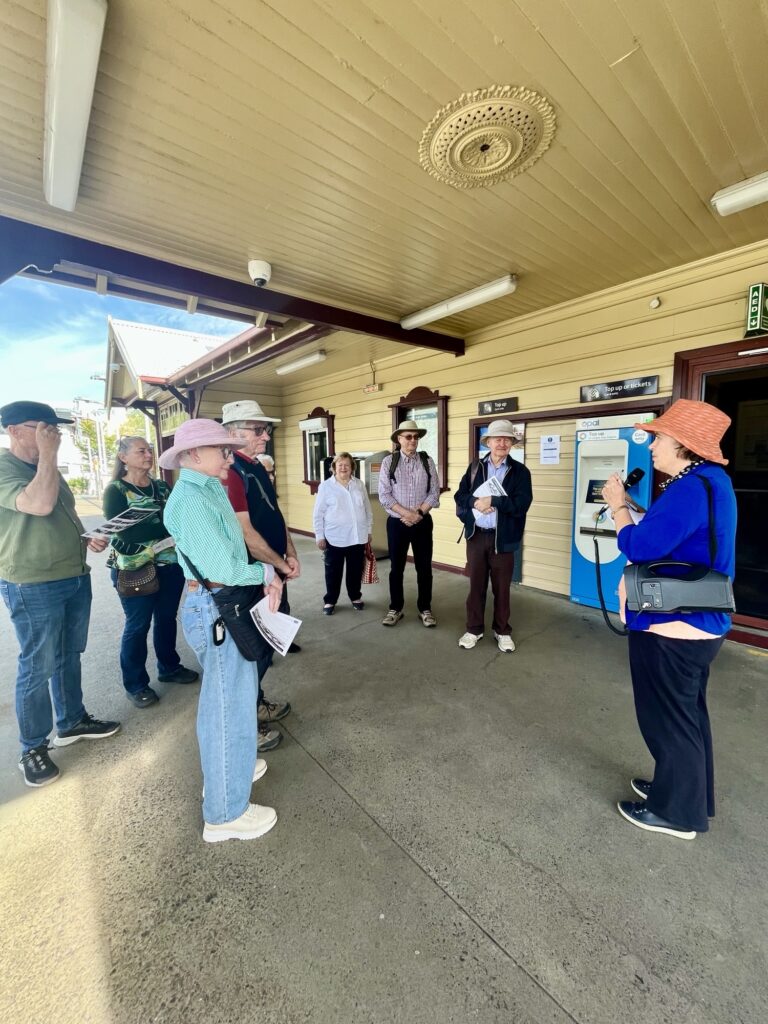
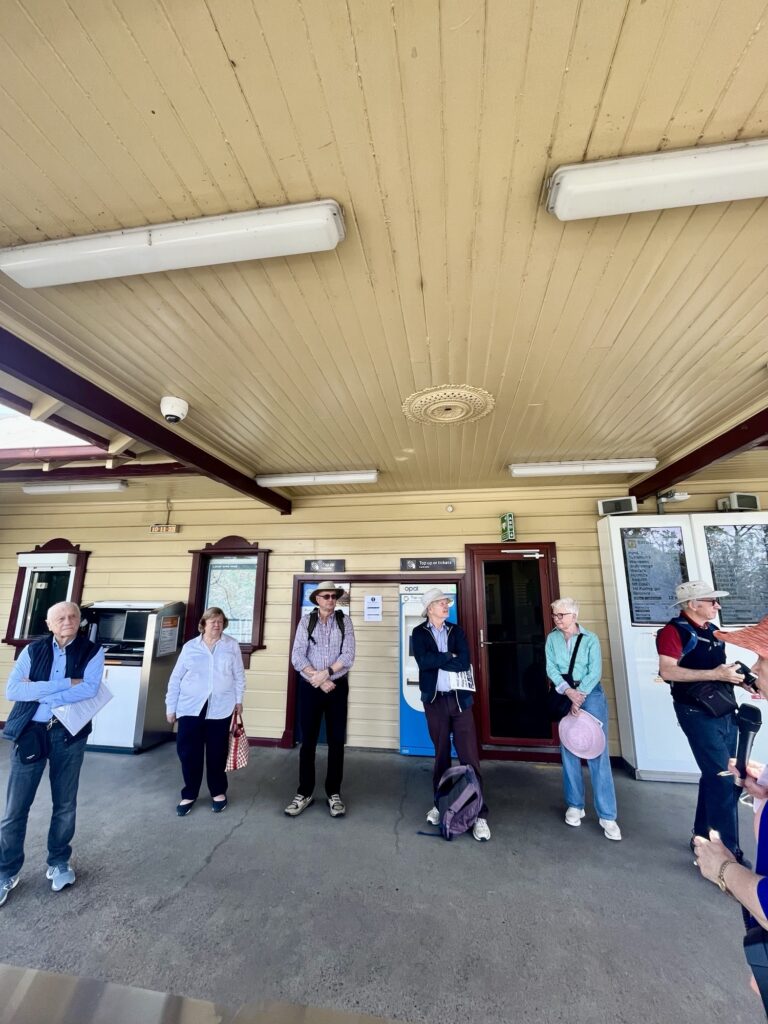
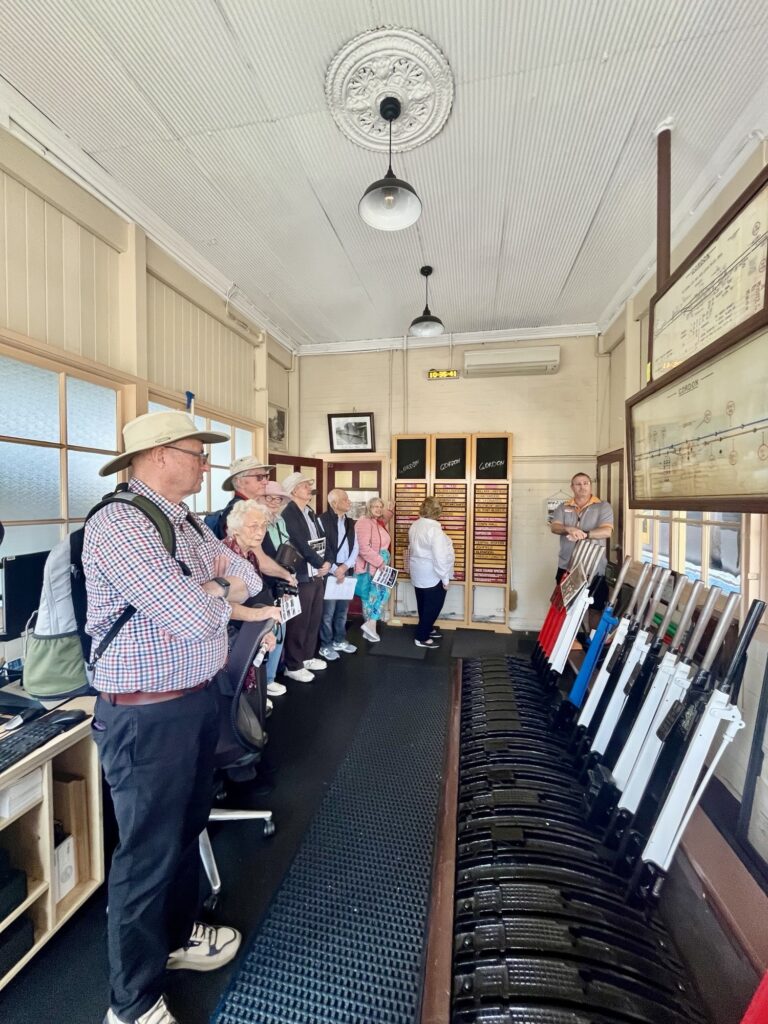
Photos of ‘The Battles to Save Gordon Station’ Walk, 3 May 2026
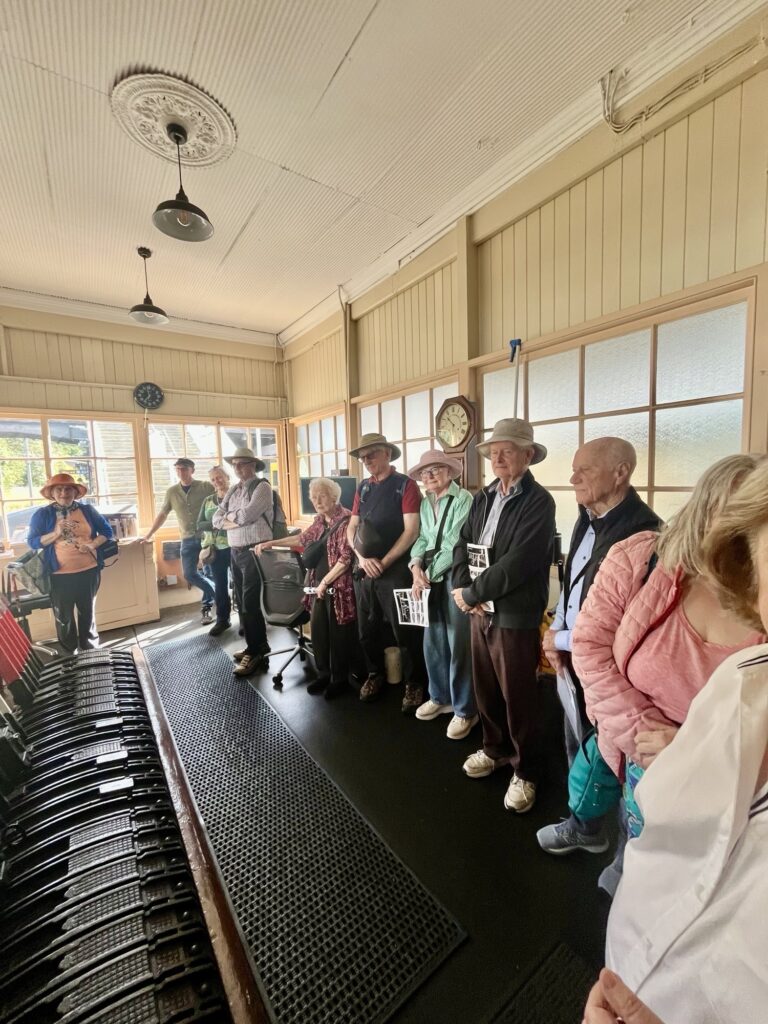
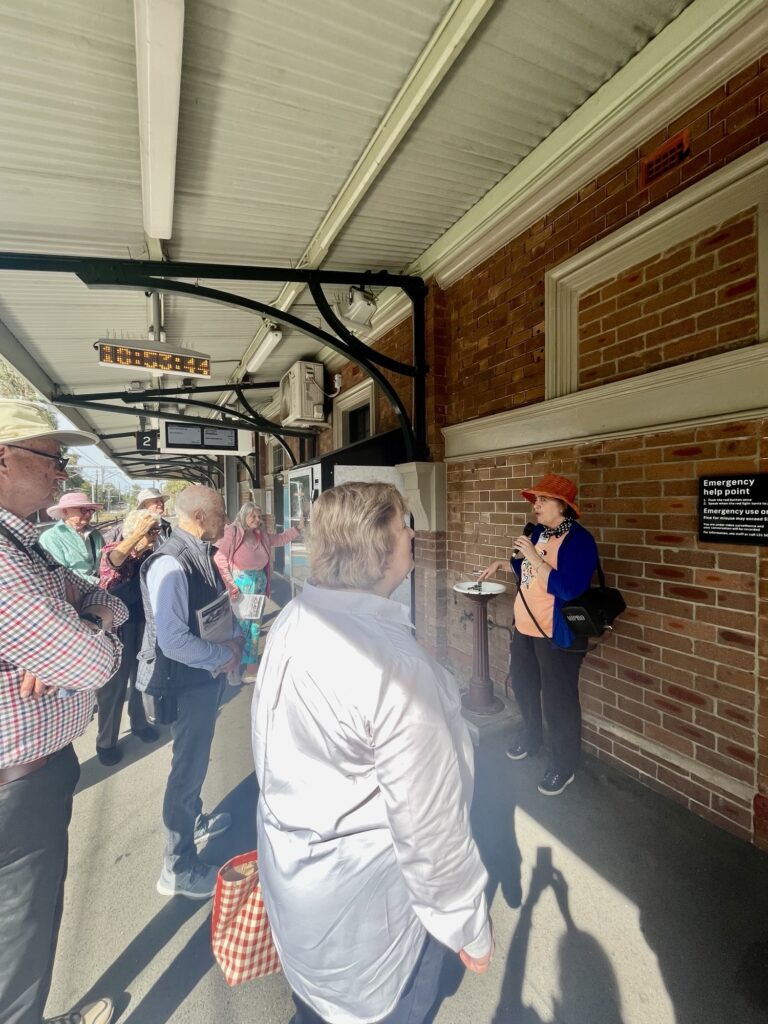
Photos of Gordon Railway Station (Ku-ring-gai Council)

Gordon Railway Station 1907
State Records NSW: State Rail Collection
From Ku-ring-gai Council Gordon and Killara image gallery
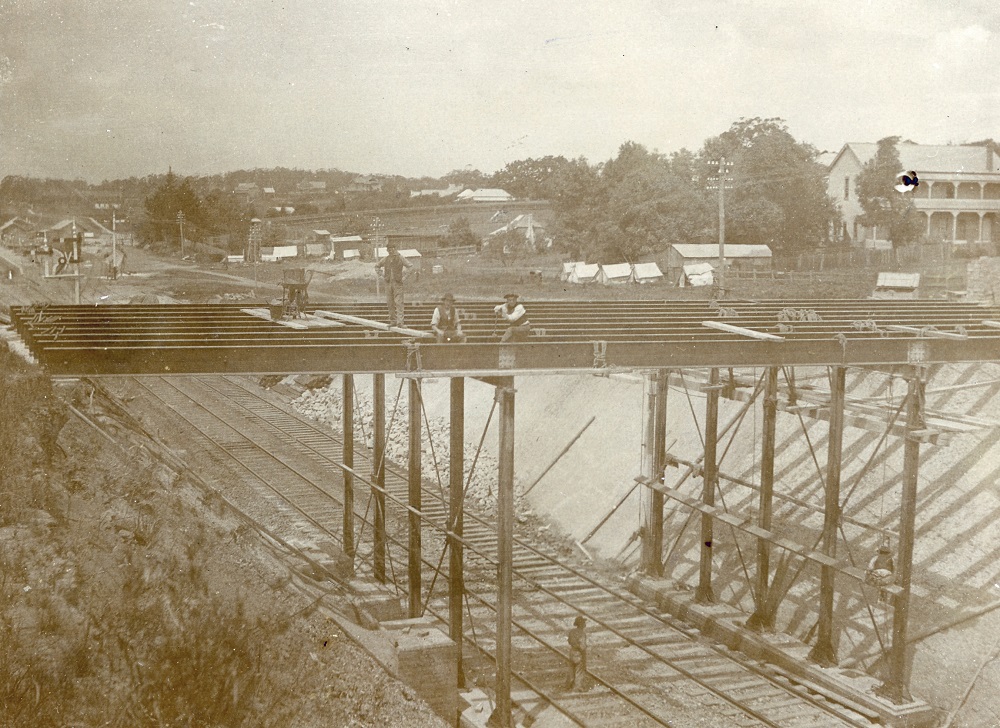
Gordon Railway Station 1908
From Ku-ring-gai Council Gordon and Killara image gallery
Itinerary of ‘The Battles to Save Gordon Station’ Walk, 3 May 2026
- Gordon Railway Station
- Annie Wyatt Garden (Henry Street, Gordon)
About Friends of Ku-ring-gai Environment (FOKE)
Friends of Ku-ring-gai Environment (FOKE) is a dedicated community voluntary organisation advocating for the preservation, protection and rehabilitation of Ku-ring-gai’s unique heritage and environment.
Founded in 1994 to protect the Ku-ring-gai’s architecture – know to contain some of the best domestic 20th Century architecture in the nation. FOKE has been a leading voice against overdevelopment. Today, FOKE actively campaigns for stronger heritage and environmental sustainability protections and has been a leading voice against the cumulative impacts of overdevelopment on Ku-ring-gai’s heritage and environment.
FOKE continues to actively campaign for stronger heritage and environmental protections based on ecologically sustainability principles.
One of FOKE’s project is working towards a UNESCO Ku-ring-gai GeoRegion. Visit the Ku-ring-gai GeoRegion website HERE.
FOKE puts the case that the environment of Ku-ring-gai has global, national, state and local significance. It is an exemplar of Sydney’s environmental heritage.
PLEASE write a letter about what you have learnt on this walk to:
- Matt Cross, MP for Davidson (Roseville, Lindfield, Killara & Gordon) davidson@parliament.nsw.gov.au
- Cr Barbara Ward (Gordon Ward) Telephone 0447 081 824 Email bward@krg.nsw.gov.au
- Cr Indu Balachandran (Gordon Ward) Telephone 0457 411 083 Email ibalachandran@krg.nsw.gov.au
- Ku-ring-gai Councillors councillors@krg.nsw.gov.au
- Ku-ring-gai Council: krg@krg.nsw.gov.au
- National Trust (NSW) Board of Directors info@nationaltrust.com.au
Dear …………………………….
On Sunday 3 May 2026, I attended the Australian Heritage Festival ‘The Battles to Save Gordon Station’ organised by Friends of Ku-ring-gai Environment (FOKE).
During this walk I learnt…………………………………. I was amazed to discover ……………………………. and very concerned about ……………………………………I respectfully ask you to ……………………………………….
Yours sincerely
……………………………………….
ALSO PLEASE:
- Sign onto receiving FOKE Newsletters HERE
- Join FOKE as a member. Details at www.foke.org.au
Acknowledgement of Country
Friends of Ku-ring-gai Environment (FOKE) acknowledges the Darramuragal, Darug and Gameraigal people as the traditional custodians of the land on which Gordon stands, paying respect to Elders past, present, and emerging.
For tens of thousands of years, the Darramuragal or Darug have nurtured this Country, traversing its tracks and ridgelines to connect communities and sustain cultural practices. We express deep regret for the profound loss and disruption the Darramuragal, Darug and Gameraigal people experienced when timber cutters cleared their forests, altered the fire regime, and took this land for farming, disregarding their deep spiritual and cultural connection to Country.
The first land grants were made in 1821. Land was used mainly for timber-getting until the 1840s. After 1840, with the clearing of the valuable timber, orchards and farms were established.
Unlike modern economic notions of ownership, the Darramuragal, Darug and Gameraigal people lived in harmony with the land, without attachment to possession. They had a profound understanding of the environment.
We are grateful that the forests and trees have regrown, fostering a strong affinity for place amongst the many who now live in Ku-ring-gai. We honor the Gameraigal‘s enduring legacy, reflected in the ancient pathways that underpin Gordon’s roads and railways, including those along the North Shore line – a railway line of outstanding scenic beauty.
We pay tribute to their 800 rock carvings and more, with some dating back to 5000 years ago, in the Ku-ring-gai Chase National Park.
We commit to respecting their ongoing connection to this land, its tall Blue Gum High & Sydney Turpentine Ironbark forests and bushland, waterways and wildlife.
Stop 1: Gordon Railway Station
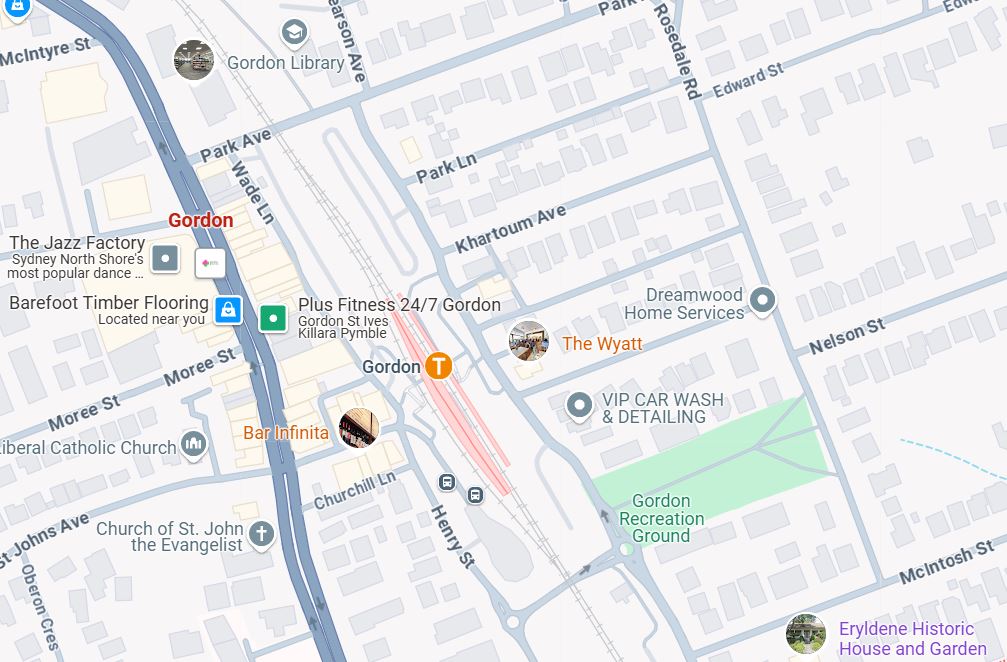
Timeline
- 1890: Single rail line between Hornsby and St Leonards (16.8 km) opened.
- 1890 January: Gordon Railway Station opened with single platform, goods siding and cross-over loop
Gordon Station was a catalyst for Gordon’s development with its Federation style architecture. The railway line was part of Ku-ring-gai’s transformation into a garden suburb. The railway was crucial for commuters, aligning with town planner John Sulman’s vision for Ku-ring-gai as a garden suburb. - 1909: Hornsby-St Leonards: single line duplicated serving Up & Down North Shore lines (Up City/Down Hornsby). Station building, including a signal box, and platforms 2/3, completed.
- 1910: Overhead Booking Office, completed; reconstructed late 19th century timber waiting room; Markings of imported British steel manufacturers are visible, both Lanarkshire, and Dorman Long & Co., Middlesbrough; Gordon Railway Gardens.
- 1927/28: Electrification of North Shore Line line in preparation for opening of Sydney Harbour Bridge. Dr JCC Bradfield the Chief Engineer for the Sydney Harbour and lived in Park Avenue, Gordon.
- 1932: Opening of the Sydney Harbour Bridge.
- 1993: Reconstruction of original timber framed waiting room (1890).
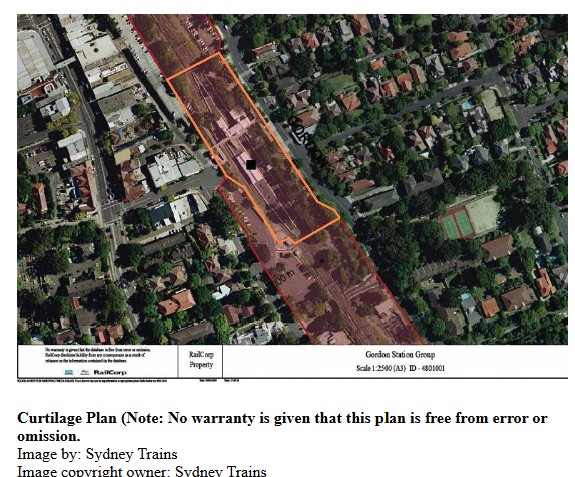
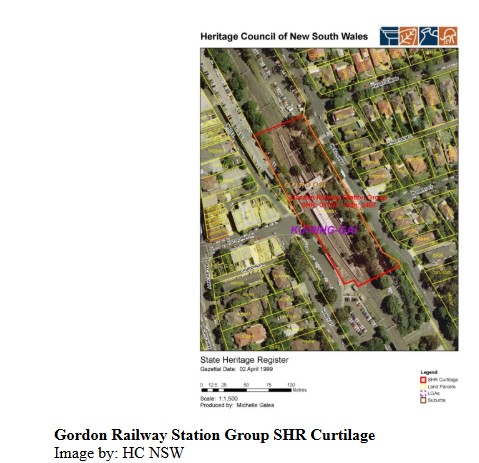
- 2 April 1999: Gordon Railway Station Group added to NSW State Heritage Register.
- 2004: Notification for three proposed lifts on the Sydney side of the Overhead Booking Office.
Janine Kitson, Jennifer Harvey and Zeny Edwards makes a presentation to NSW Heritage Council requesting relocation of lifts to Hornsby end of Station. - 2004-2006: Gordon Railway Station undergoes accessibility improvements, including lifts, walkways and covered areas. Form Architects in association with Jennifer Harvey prepared a Heritage Impact Report to assess the impact of proposed upgrades to Gordon Station.
Station upgrades including 2 lifts on north side of overhead booking office, upgrading footbridge, re-grading and resurfacing Platform 1, steel-framed shelters on platform 1, 2 and 3. - State Heritage listing acknowledges the high esteem held by particular members of the community for the Gordon Railway Station
State Heritage Register Criteria
d) Social Significance:Gordon Railway Station has social significance as evidenced by the community involvement during the design and construction of the new lifts and access arrangements. Local historical societies are also known to include the station complex in historical tours of the local area, thereby demonstrating the high esteem held by particular members of the community for the Gordon Station - 2014: Carpark on the station’s western side was demolished to make way for a three-storey carpark and bus interchange. The new interchange opened in early June 2015.
- 2018: Platform 1 was widened as part of station upgrade works. FOKE campaigns to protect Camellias on Platform 1.
- 2024: NSW Government announces Gordon Railway Station as a Transport Oriented Development (TOD).
NSW State Heritage listing of Gordon Railway Station
Environmental context of Gordon Railway Station
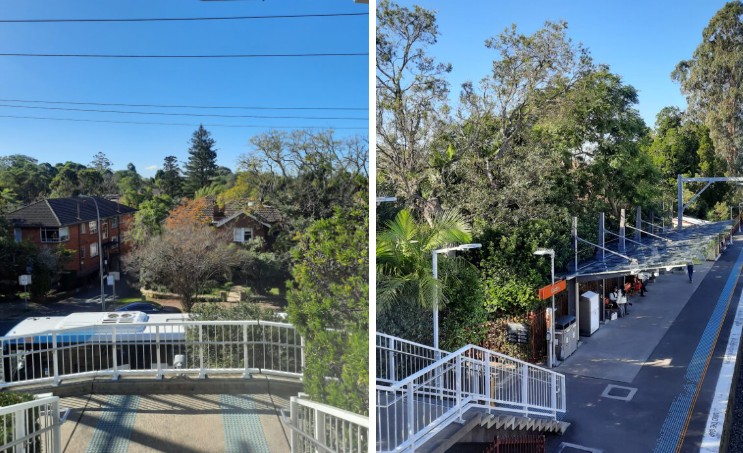
- Gordon Station is located in an environmentally sensitive railway corridor.
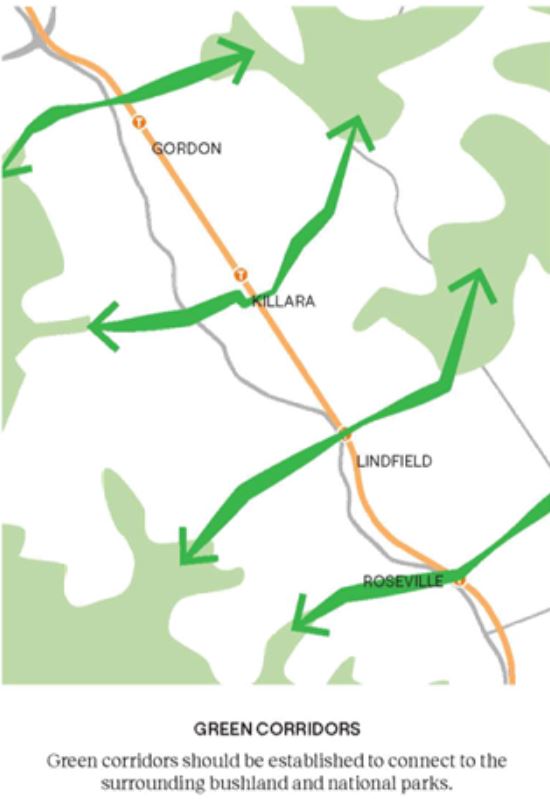
- It is part of Ku-ring-gai’s Green Corridors, supporting biodiversity including its Critically Endangered Blue Gum High Forest and Sydney Turpentine Ironbark Forest (STIF)
- Gordon Railway Station is part of a north-south environmentally sensitive corridor
- Ku-ring-gai has four endangered ecological communities and two critically endangered, under the NSW Biodiversity Conservation Act 2016.
- An ecological community is listed as critically endangered if the Threatened Species Scientific Committee (TSSC) determines it is facing an extremely high risk of extinction in Australia in the immediate future.
- Threats to these communities have been the result of clearing, fragmentation and pressures from the surrounding environment, such as weeds, nutrient run off and sedimentation.
- Urban deforestation is being fuelled by the NSW Government State Environment Planning Policies – or SEPPs – (Transport Oriented Development, Low to Mid Rise Housing, State Significant Planning Developments, Housing Delivery Authority)
Gordon Railway Station Plaque (by Ku-ring-gai Council)
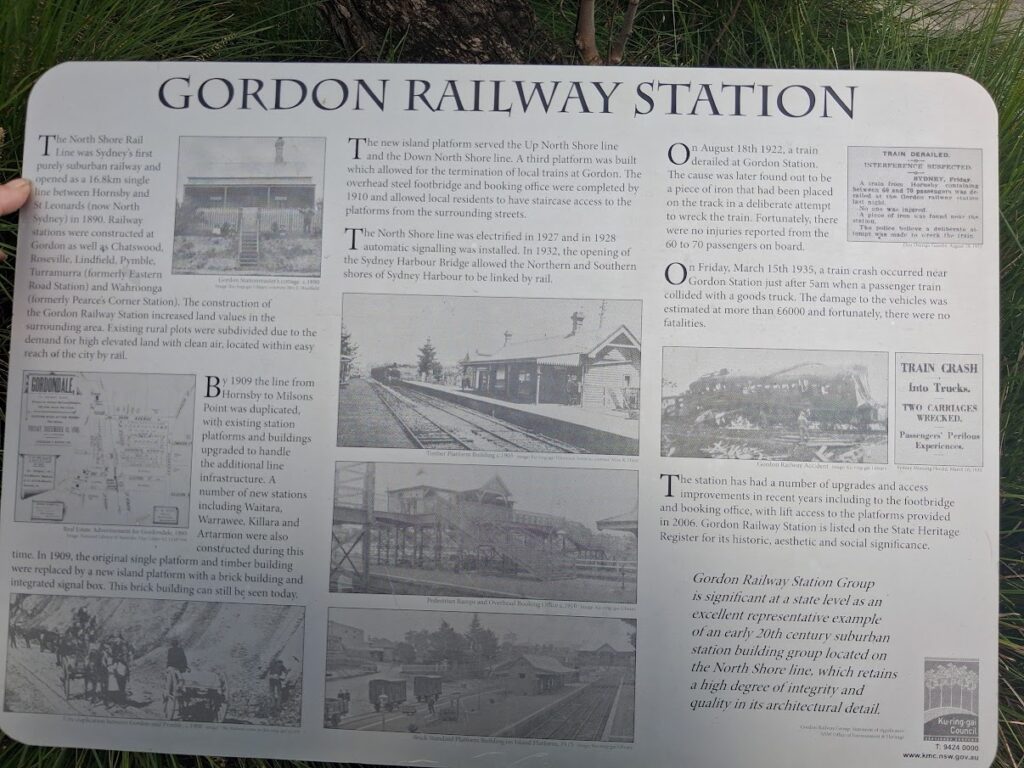
The North Shore Rail Line was Sydney’s first purely suburban railway and opened as a 16.8km single line between Hornsby and St. Leonards (now North Sydney) in 1890. Railway stations were constructed at Gordon as well as Chatswood, Roseville, Lindfield, Pymble, Turramurra (formerly Eastern Road Station) and Wahroonga (formerly Pearce’s Corner Station). The construction of the Gordon Railway Station increased land values in the surrounding area. Existing rural plots were subdivided due to the demand for high elevated land with clean air, located within easy reach of the city by rail.
By 1909 the line from Hornsby to Milson’s point was duplicated with existing station platforms in buildings upgraded to handle the additional line infrastructure. A number of new stations including waitara, Warrawee, Killara and Artarmon were also constructed during this time. In 1909 the original single platform in timber building was replaced by a new island platform with brick building and integrated signal box. This brick building can still be seen today.
The new island platform served the Up North Shore line and the Down North Shore line. A third platform was built which allowed for the termination of local trains at Gordon. The overhead steel footbridge and booking office was completed by 1910 and allowed local residents to have staircase access to the platforms from the surrounding streets.
The North Shore line was electrified in 1927 and in 1928 automatic signalling was installed. In 1932, the opening of the Sydney Harbour bridge allowed the Northern and Southern shores of Sydney Harbour to be linked by rail.
On August 18th 1922, a train derailed at Gordon station. The cause was later found out to be a piece of iron that had been placed on the track in a deliberate attempt to wreck the train. Fortunately, there were no injuries reported from the 60 to 70 passengers on board.
On Friday, March 15th 1935, the train crash occurred near Gordon station just after 5am when a passenger train collided with a goods truck. The damage to the vehicle was estimated more than 6000 pounds and fortunately, there were no fatalities.
The station has had a number of upgrades and access improvements in recent years including the footbridge and booking office, with lift access to the platforms provided in 2006. Gordon Railway Station is listed on the State Heritage Register for its historic, aesthetic and social significance.
Gordon Railway Station Group is significant at a state level as an excellent representative example of an early 20th century suburban station building group located on the North Shore line, which retains a high degree of integrity and quality in its architectural detail.
Stop 2: Annie Forsyth Garden, Henry Street
- Annie Forsyth Wyatt Garden which contains a memorial to the Tree Lovers’ Civic League. The garden itself is a monument to Wyatt as the founder of the National Trust in Australia.
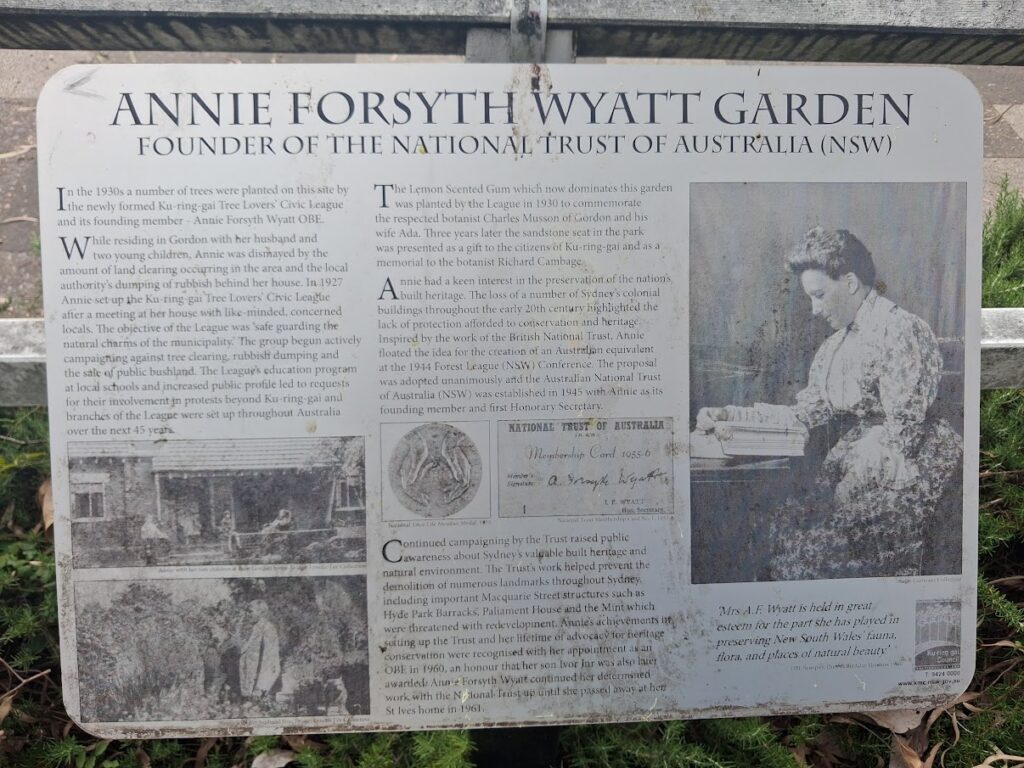
Annie Wyatt Plaque (by Ku-ring-gai Council)
Annie Forsyth Wyatt Garden
Founder of the National Trust of Australia (NSW)
In the 1930s a number of trees were planted on the site by the newly formed Ku-ring-gai Tree Lovers’ Civic League and its founding member Annie forces Wyatt OBE.
While residing in Gordon with her husband and two young children, Annie was dismayed by the amount of land clearing occurring in the area and the local authorities dumping of rubbish behind her house. In 1927 Annie set up the Ku-ring-gai Tree Lovers’ Civic League after a meeting at her house with like-minded, concerned locals. The objective of the league was apostrophe safeguarding the natural charms of the municipality. The group began actively campaigning against tree clearing, rubbish dumping and the sale of public bushland. The League’s education program at local schools and increased public profile led to requests for their involvement in protests bey9od Ku-ring-gai and branches of the League were set up throughout Australia over the next 45 years.
The Lemon Scented Gum which now dominates this garden was planted by the League in 1930 to commemorate the respected botanist Charles Musson of Gordon and his wife Ada. Three years later the sandstone seat in the park was presented as a gift to the citizens of Ku-ring-gai and as a memorial to the botanist Richard Cambage.
Annie had a keen interest in the preservation of the nation’s built heritage. The loss of a number of Sydney’s colonial buildings throughout the early 20th century highlighted the lack of protection afforded to conservation and heritage. Inspired by the work of the British National Trust, Annie floated the idea for the creation of an Australian equivalent at the 1944 Forest League (NSW) Conference. The proposal was adopted unanimously and the Australian National Trust of Australia (NSW) was established in 1945 with Annie as its first founding member and first Honorary Secretary.
Continued campaigning by the Trust raised public awareness about Sydney’s valuable built heritage and natural environment. The Trust work helped prevent the demolition of numerous landmarks throughout Sydney including important Macquarie Street structures such as Hyde Park Barracks, Parliament House and the Mint which was threatened with redevelopment. Annie’s achievement in setting up the Trust and her lifetime of advocacy for heritage conservation were recognised with her appointment as an OBE in 1960, an honour that his son Ivor Jnr was also later awarded. Annie Forsyth Wyatt continued her determined work with the National Trust up until she passed away at her St Ives home in 1961.
Mrs A.F. Wyatt is held in great esteem for the part she has played in preserving NSW’s fauna, flora, and places of natural beauty (OBE Synopsis, Queens Birthday Honours 1960)
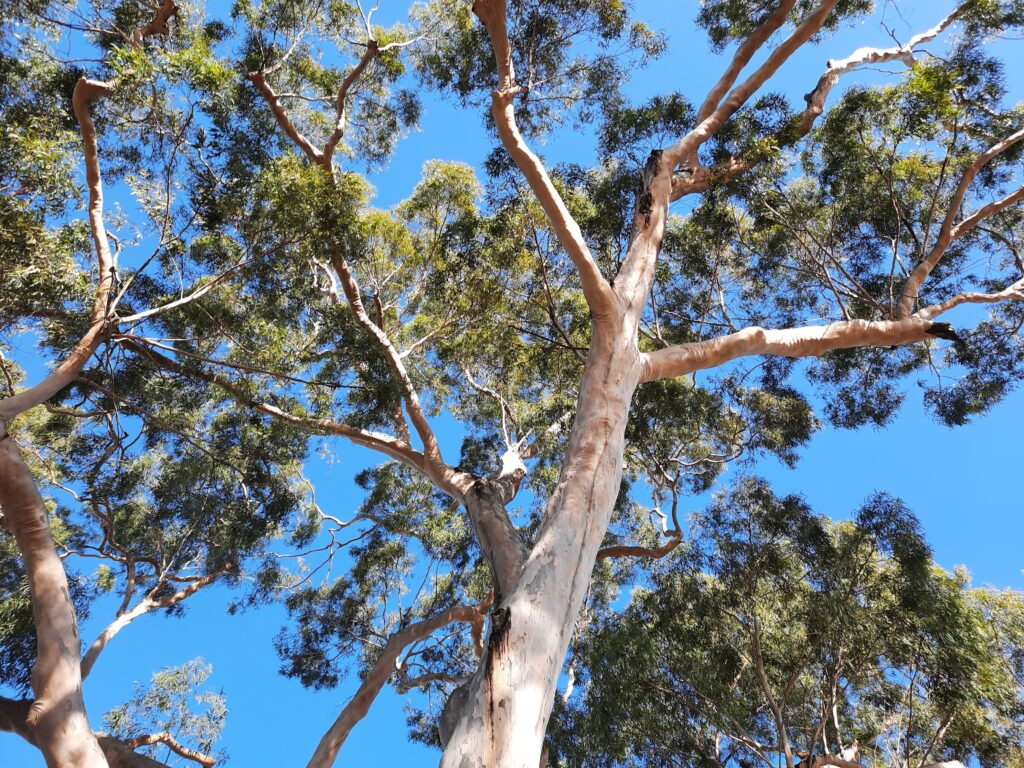
The Lemon Scented Gum (Corymbia citrodora) which now dominates this garden was planted by the Ku-ring-gai Tree Lovers’ Civic League in 1930 to commemorate the respected botanist Charles Musson of Gordon and his wife Ada.
This Lemon Scented Gum (Corymbia citrodora). This tree removes 5185g of pollution each year (Killior’ra Tree Trail).
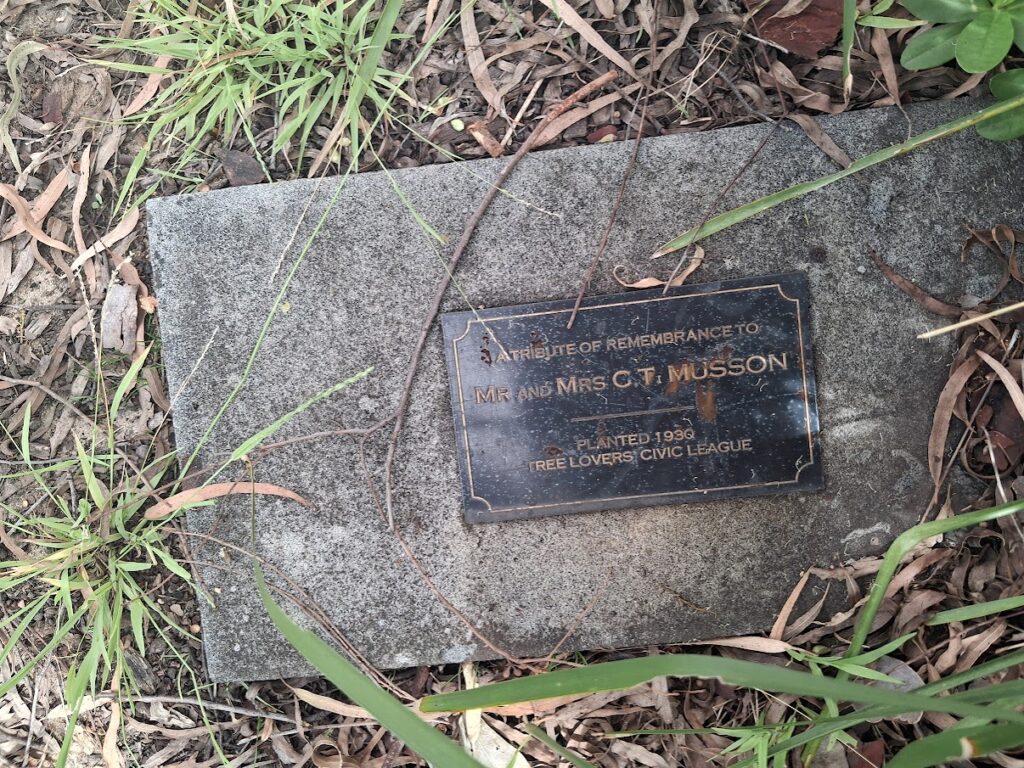
Muson Plaque (by Ku-ring-gai Tree Lovers’ Civic Association)
A tribute of remembrance to Mr and Mrs C. T. Musson
Planted 1930
Tree Lovers’ Civic League
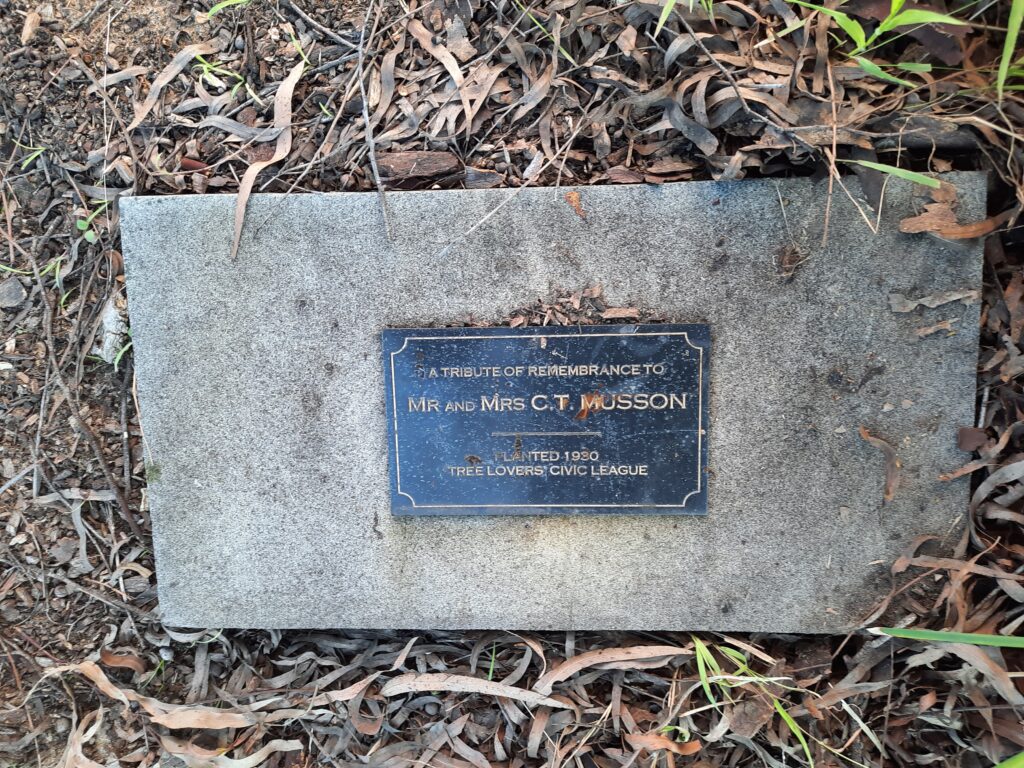
Charles Musson was a naturalist and teacher who for nearly 30 years taught science subjects (largely botany and entomology) at the Hawkesbury Agricultural College in NSW. He was an enthusiastic advocate for the study of nature, particularly ecological and environmental aspects. Musson published prolifically on a wide range of natural history subjects (including weeds, seed testing, shells and birds) in scientific journals and popular magazines. For 40 years he was a Fellow of the Linnean Society of NSW. He lived in Nelson Street, Gordon.
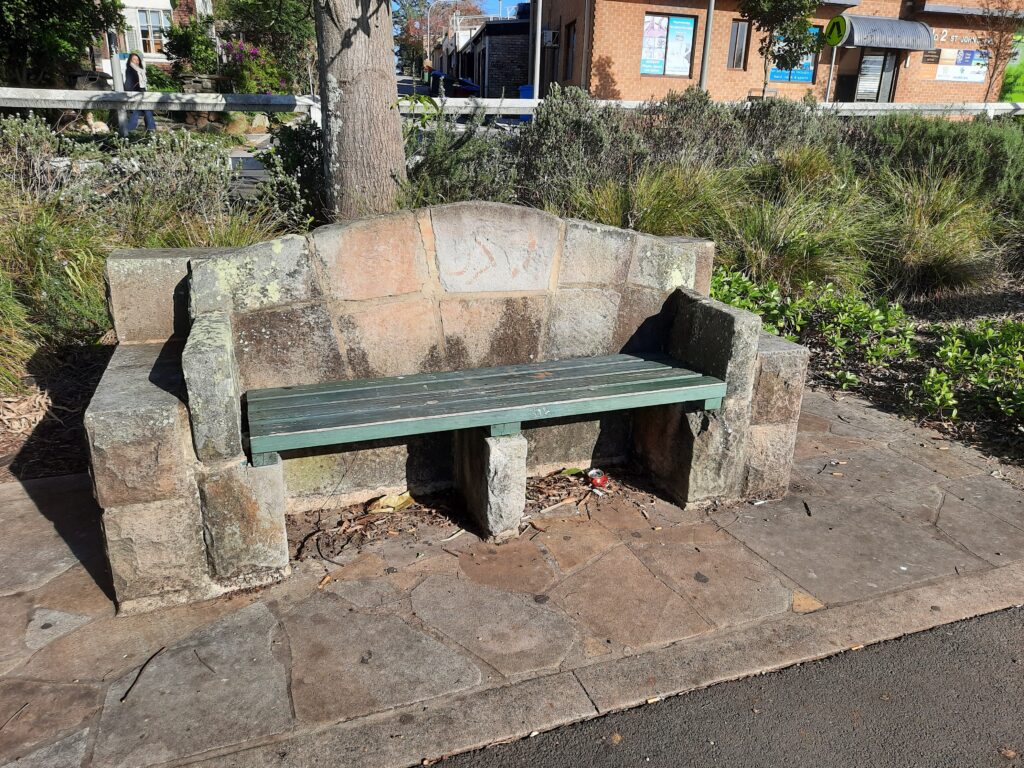
1933 the Ku-ring-gai Tree Lovers’ Civic League presented this sandstone seat as a gift to the citizens of Ku-ring-gai and as a memorial to the botanist Richard Cambage (1859-1928).
Richard Cambage made important contributions to the description of the general Acacia and Eucalyptus.
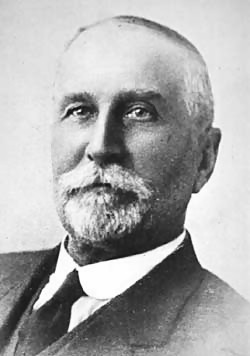
Richard Cambage (1859-1928) contributed to the Linnean Society a series of “Notes on the Botany of the Interior of New South Wales” from 1901-1903 as well as “Notes on the Native Flora of New South Wales”,(1901-1903) published for more than 20 years. He was secretary of the Royal Society of New South Wales from 1914-1922 and from 1925-28. He was president in 1912 and 1924.
He was also involved in the Australian National Research Council, the Australasian Association for the Avancement of Science, the NSW Forest League and Australian Wattle League and Royal Historical Society.
Acacia cambagei and Eucalyptus cambageana are named after him
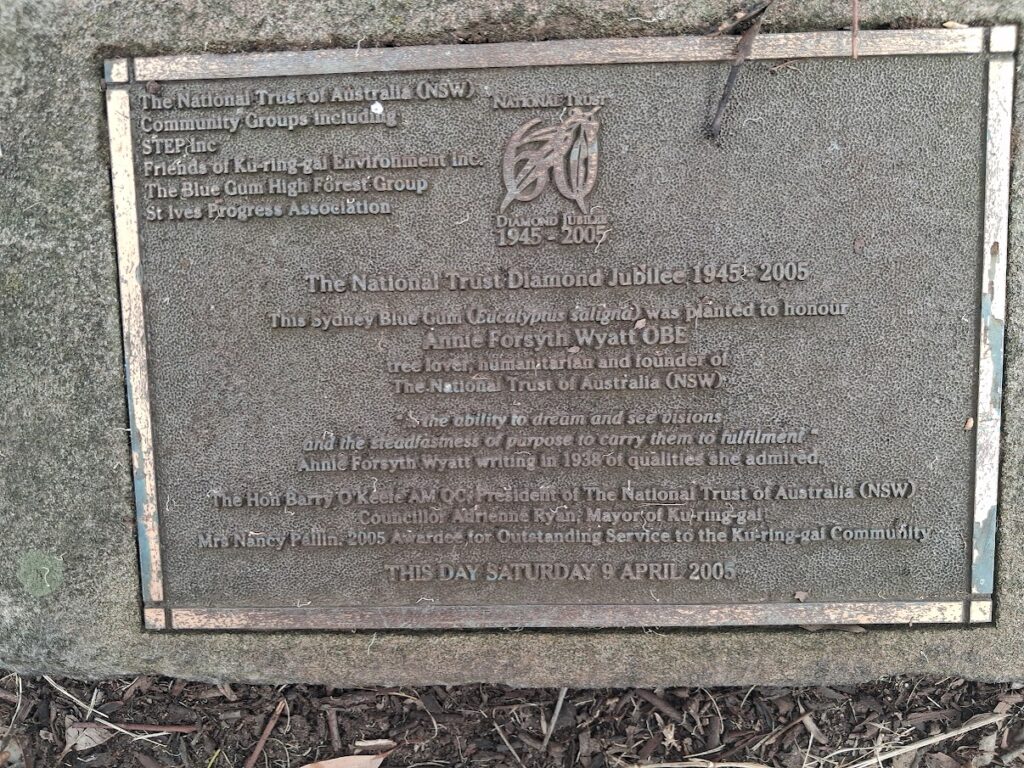
Plaque (by The National Trust of Australia NSW, STEP Inc, FOKE, Blue Gum High Forest Group, St Ives Progress Association)
The National Trust Diamond Jubilee 1945 to 2005
This Sydney Blue Gum (Eucalyptus saligna) was planted to honour
Annie Forsyth Wyatt OBE
tree lover, humanitarian and founder of
The National Trust of Australia (NSW)“… the ability to dream and see visions
and the steadfastness of purpose to carry them to fulfilment”
Annie Forsyth Wyatt writing in 1938 of qualities she admired.The Hon Barry O’Keefe AM QC, President of The National Trust of Australia (NSW) Councillor Adrienne Ryan, Mayor of Ku-ring-gai
Mrs Nancy Pallin 2005 Awardee for Outstanding Service for the Ku-ring-gai Community
THIS DAY SATURDAY 9 APRIL 2005
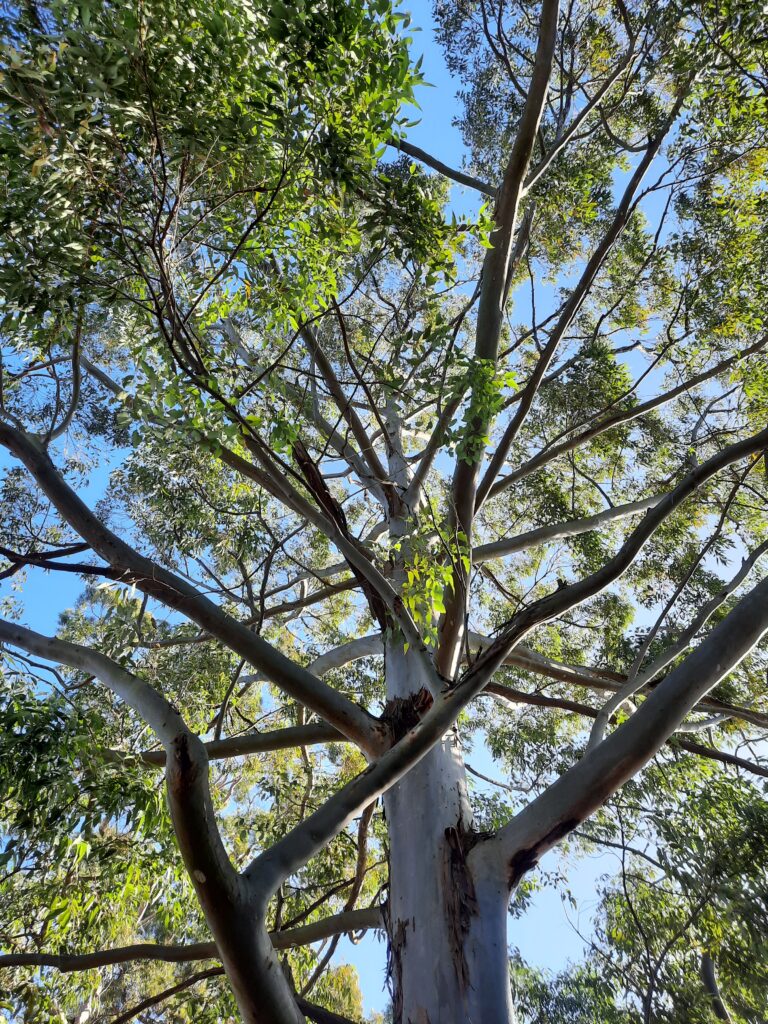
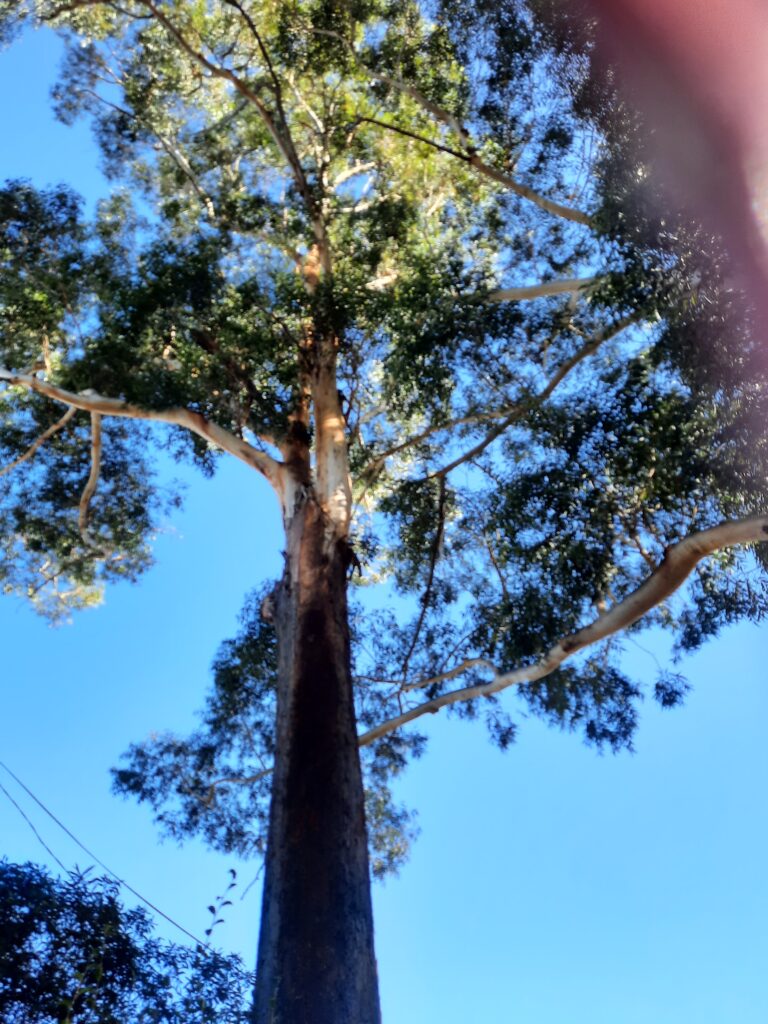
Scientific name: Blue Gum High Forest in the Sydney Basin Bioregion
Conservation status in NSW: Critically Endangered Ecological Community
Commonwealth status: Critically Endangered
More information on Blue Gum High Forest (BGHF)
View Blue Gum High Forest fact sheet(PDF, 369KB)
BGHF is named for the Sydney Blue Gum, one of the most common trees found in the forest, reaching heights of up to 30 metres. The forest provides important habitat and shelter for native animals such as the Grey-headed Flying Fox and Glossy Black Cockatoo – both endangered species.
Once covering large areas of the shale-capped ridge tops of northern Sydney, less than five per cent of BGHF now remains, restricted to the shale soils of Northern Sydney around Pennant Hills, Epping and parts of Ku-ring-gai. The largest surviving remnant of BGHF is in St Ives around Dalrymple-Hay Nature Reserve and Browns Forest.
You can walk among the majestic Sydney Blue Gums and Blackbutts of Dalrymple-Hay Reserve and Browns Forest, seeing the landscape as the Aboriginal and early European settlers would have seen.
An ecological community is listed as critically endangered if The Threatened Species Scientific Committee (TSSC) has determined that Sydney Blue Gum High Forests faces an extremely high risk of extinction in Australia in the immediate future.
It is threatened as a result of clearing, fragmentation and pressures from the surrounding environment, such as weeds, nutrient run off and sedimentation.
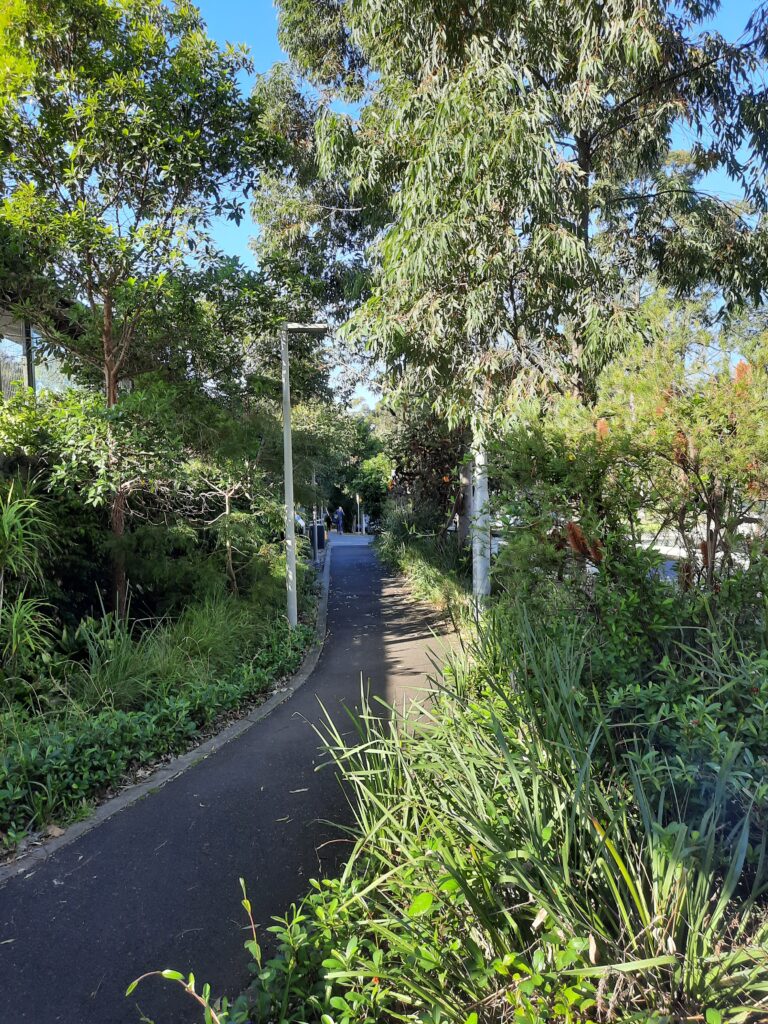
Restoration of a small bushland wildlife corridor
Further Self Guided Walk of Gordon
St Johns Avenue
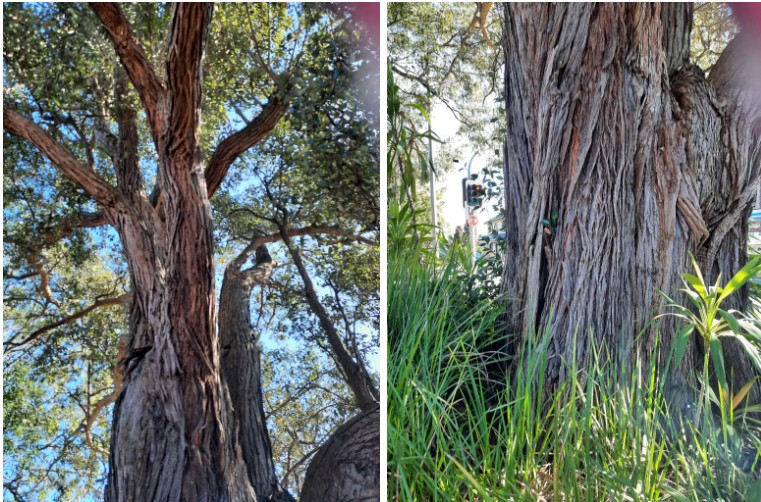
Sydney Turpentine tree, St Johns Avenue, Heritage Park
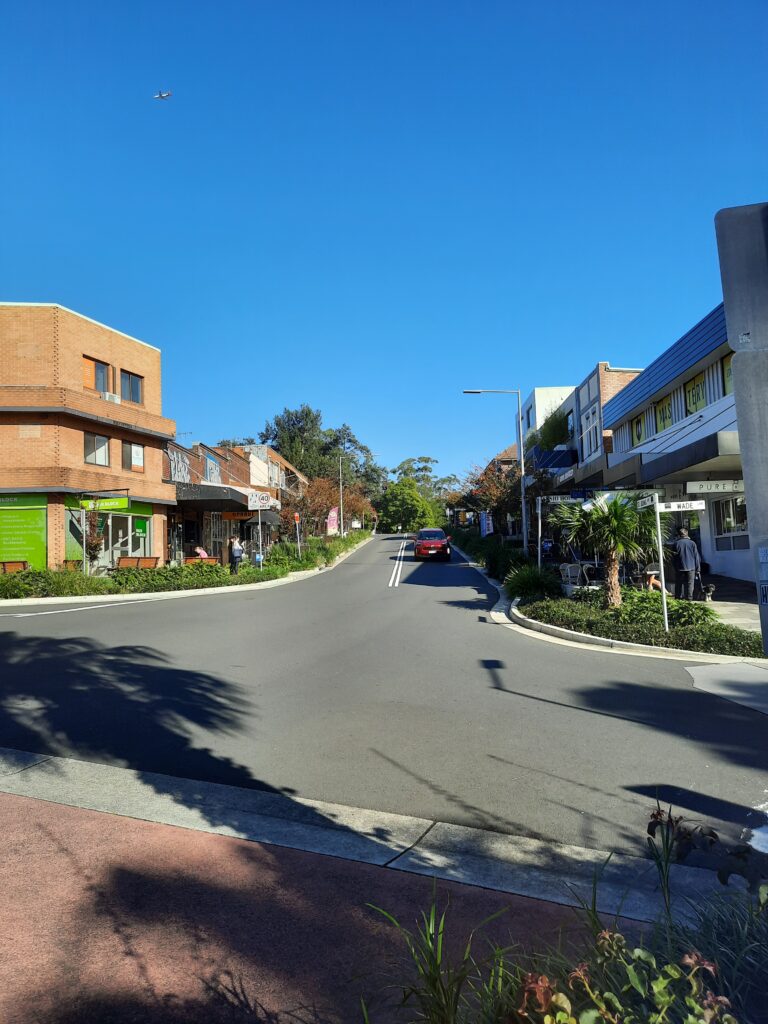
Gordon Railway Station is close to the Pacific Highway, that is on the North Shore ridgeline. On the western side of this ridgeland it drops steeply towards the Lane Cove River.
Ku-ring-gai Council says it is greening our streets and reducing stormwater runoff at St Johns Avenue.
- Gordon lies in the centre of Ku-ring-gai Municipality and was the earliest settlement in the area
- The name Gordon, adopted for the suburb in 1879, is derived from Gordondale Estate, the estate owned by Robert McIntosh, and honours Sir James Willoughby Gordon, Quartermaster-General of the Horse Guards in London in the 1830s
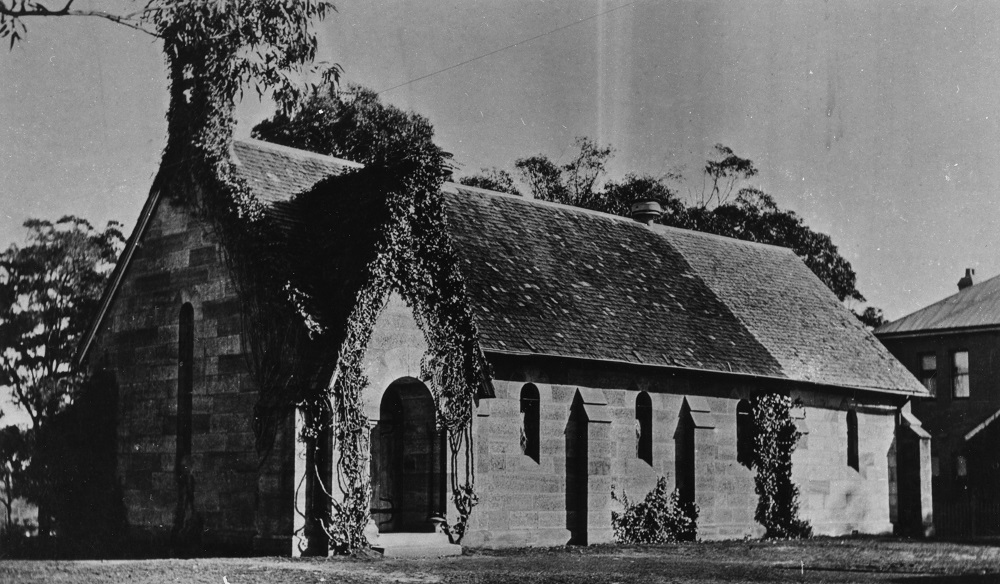
St John’s Church Gordon ca, 1923
From Ku-ring-gai Council Gordon and Killara image gallery
- St John’s Anglican Church Heritage listed.
- The site was where the first school was built in 1816 by Governor Macquarie. It was destroyed by bushfire in 1823.
- The first church was built as a result of a petition sent to the Governor through the Bishop of Sydney by 36 local inhabitants. Robert Pymble, William Henry McIntosh and John Brown were appointed trustees and the land was knocked down to them for 37 pounds. The church was designed by Edmund Blacket and the foundation stone was laid on 26 October 26 1872.
- 1991 St Johns Church Rectory built
- St. John’s Cemetery, which adjoins the church, began earlier than the church itself.
- Before the opening of St. John’s Cemetery in 1867, if a person died in the vicinity of Gordon, New South Wales, it was necessary for the burial to take place on private property or at a cemetery at North Sydney, Ryde or Parramatta.
- Since the opening, more than 1,200 people have been interred at St. John’s. The ashes of another 1,000 people are located in niches in the columbarium walls.
- The first recorded burials having occurred in 1867. More can be read on St John’s Cemetery HERE. The book ‘Pioneers at Peace’ by Jill Lyons (Spurwood Press, 1994, ISBN No. 0 646 19503 4), which outlines the history of St Johns Church Cemetery can be read HERE. A cemetery map and an index of burials and commemorations is included. St John’s Cemetery is the only cemetery in Ku-ring-gai.
- The first burial, on 8 May 1867, was that of Mary Ann Britton of Lane Cove. Mary Ann was just twenty-seven years old and left behind a husband, John, and three children under seven years old — two daughters, Alice and Sarah, and a son, William. John Britton later remarried. Of the children, the girls both married and seem to have died in the Mullumbimby area in the 1930s, with William staying in Sydney. The story of Mary Ann Britton and her family is but one of the many stories of those whose final resting place is St. John’s Cemetery inclujding Sir Alfred Parkes (Sydney Lord Mayor), Eccleston du Faur, Edward Hickey (policeman murdered on 1 May 1913), JCC Bradfield and wife. The history of St. John’s cemetery has been written by Jill Lyons. More can be read here – St John’s Cemetery, Gordon and Pioneers at Peace: The Story of St John’s Cemetery, Gordon
- The first meeting of Ku-ring-gai Shire Council on 8 December 1906 was held in the Parish Hall of St John’s Anglican Church, Gordon
- St John’s Anglican Church houses the Pozieres Cross, an original wooden cross erected on the Pozieres battlefield in 1916. It was erected in memory of the fallen from the 18th Battalion AIF, which fought with distinction from Gallipoli to Pozières. The cross was rescued from the battlefield and brought back to Australia after the war, where it was placed in the church’s Warrior’s Chapel. In addition to the Pozieres Cross, the chapel houses other World War I relics and the colours of the 18th Battalion.
- Stained glass windows depict local Ku-ring-gai pioneer John Brown and original Trustee of Church (including Edward McIntsoh, Robert Pymble II)
- St Johns Church has the original bell
- 1960s small wooden hall relocated to rear of church and a War Memorial Hall built
- St John’s Avenue is thought to be the first paved road in Ku-ring-gai
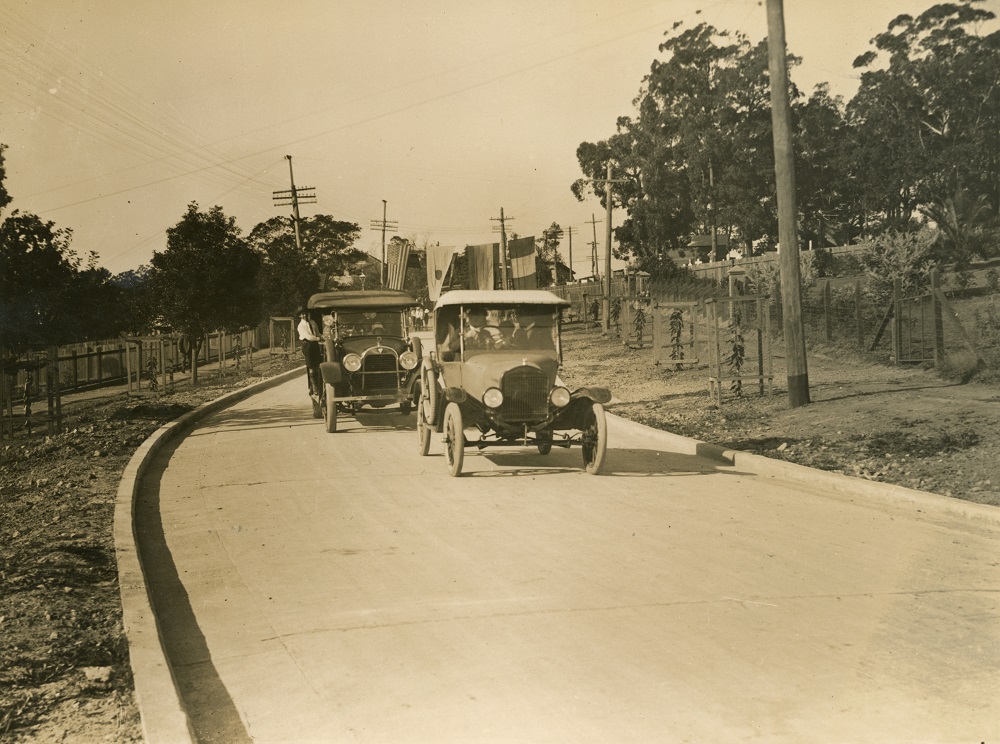
Cars using St John’s Ave ca, 1928
From Ku-ring-gai Council Gordon and Killara image gallery
- Land for a high school at the end of St Johns Avenue
- Yarabah Avenue Conservation Area(PDF, 86KB)
- Tulkiyan , Arts and Crafts style, listed on the State Heritage Register (Gordon has only two State listed houses in Gordon – Tulkiyan and Eryldene )
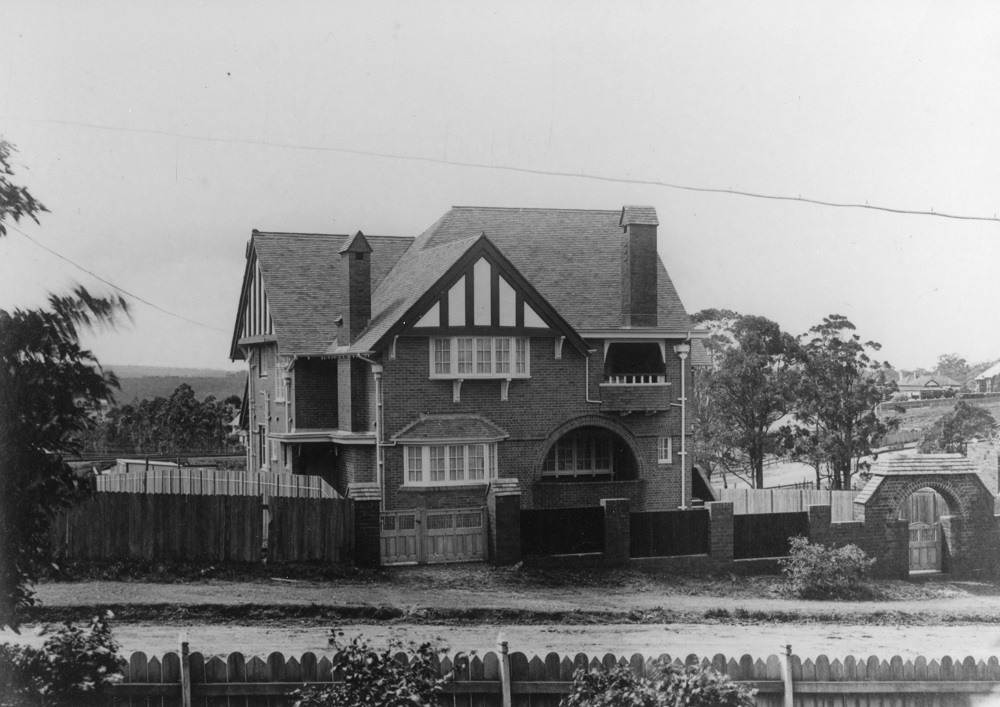
Tulkiyan, Pacific Highway, Gordon 19112
Source: Ku-ring-gai Library History Collection
From Ku-ring-gai Council Gordon and Killara image gallery
- Traffic
- 1959 of the Farmer & Company store, which later became Myer department store. In the 1960s Gordon was a bustling centre
- In 2006, Ku-ring-gai Council submitted a Draft Local Environmental Plan and Draft Ku-ring-gai Development Control Plan for Gordon Town Centre. The plans were prepared in response to a direction from the Minister for Planning to provide more housing in and around key commercial centres and to help increase retail and commercial development to cater for the needs of the local community.
- Gordon Centre – 28 storeys
- Ku-ring-gai Council Chambers
Cnr Pacific Highway & Park Avenue
- Gordon Public School, constructed in 1875, is the earliest public building in Gordon. It closed in 1989 and is now the home of the local historical society. The main branch of Ku-ring-gai Library and the police station adjoin the old school building.
School sold off in 1988
Cnr Park Avenue & Pearson Avenue
- Former Anchor designed former Gordon Library
- 3a,3b,5a, 7 Burgoyne and 1&3 Pearson Avenue and 4 Burgoyne Lane, Gordon, STATE SIGNFIICANT DEVELOPMENT
Park Avenue
- Gordondale Estate Conservation Area(PDF, 88KB)
- 3-9 Park Avenue, Gordon STATE SIGNIFICANT DEVELOPMENT (currently on public exhibition)
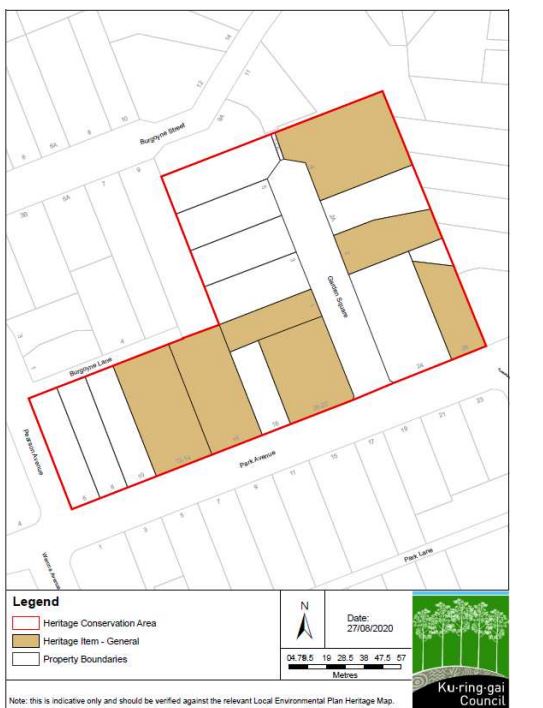
Corner of Park Avenue and Rosedale Road
Annie Forsth Wyatt, 26 Park Avenue, Gordon
Annie Forsyth Wyatt (3 May 1885-27 May 1961), founder of the National Trust (NSW) lived at 26 Park Avenue and became deeply concerned about Ku-ring-gai Council dumping rubbish in the bushland valley below her house. This anger led her to establish the Ku-ring-gai Tree Lovers’ Civic League after a meeting at her house with like-minded, including Mrs Bradfield and Mrs Holeman in 1927. The objective of the League was “safeguarding the natural charms of the municipality”.
Perhaps it was Ku-ring-gai Council’s ‘Super Sentinel Steam Wagons’ that dumped the garbage in the creek below Annie Forsyth Wyatt’s home at 26 Park Avenue that enraged her to become an ‘ardent conservationist and tree lover’.
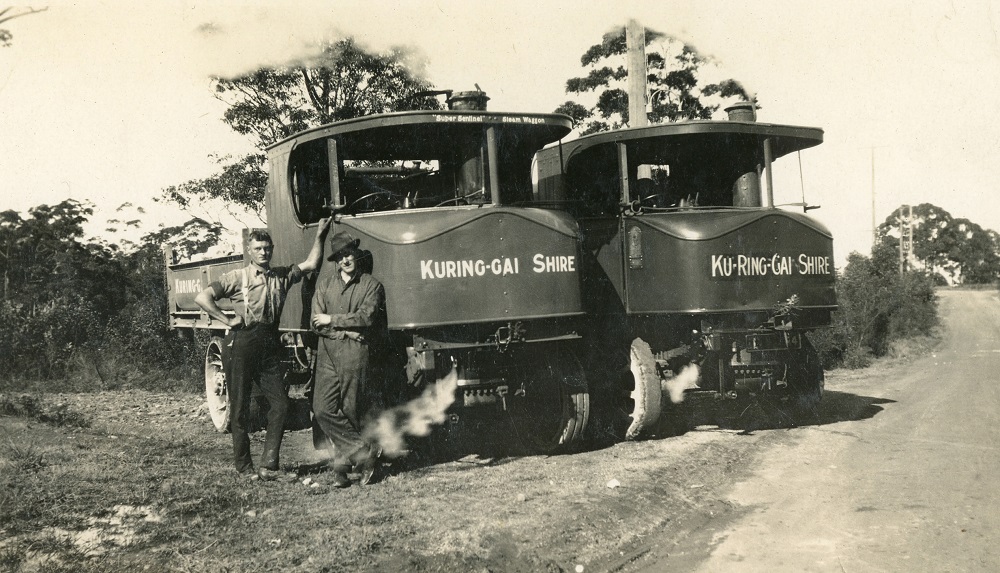
Super Sentinel Steam Wagons ca, 1926
From Ku-ring-gai Council Gordon and Killara image gallery
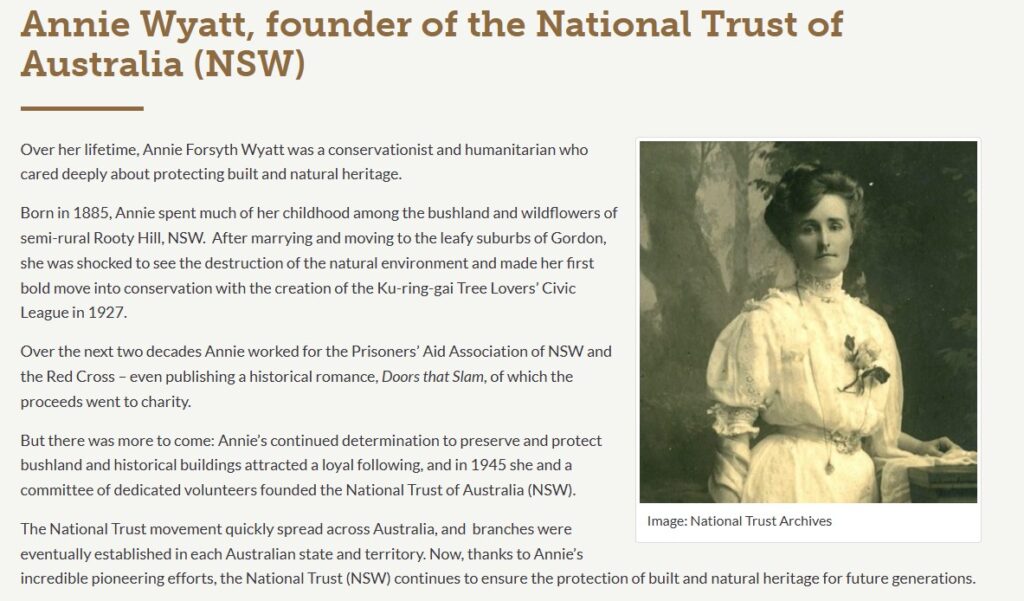
https://www.nationaltrust.org.au/blog/remarkable-women-connected-to-the-national-trust-nsw
In 1927, in response to the destruction of much of the natural environment around Gordon, Annie Wyatt set up the Ku-ring-gai Tree Lovers’ Civic League (https://dictionaryofsydney.org/blog/annie_wyatt_heritage_warrior)
Ku-ring-gai Tree Lovers’ Civic League
The Tree Lovers’ Civic League was founded by Annie Forsyth Wyatt in about 1935, after she moved to a bushland setting at Park Street in Gordon. It grew out of her concern at the destruction of the natural environment in the area, particularly Browns Forest and Dalrymple Hay Reserve.
The cause espoused by the Tree Lovers’ Civic League quickly spread throughout New South Wales, with branches formed in Hunters Hill, Orange, Epping, Darwin, Goulburn, Newcastle and Adelaide. The league promoted the beauty and benefits of trees, distributed tree seeds, planted trees, organised school essay competitions and liaised with local government. The establishment of the league led to the formation of the National Trust of Australia by Annie Wyatt and others in 1945.
by Zeny Edwards, 2008
https://en.wikipedia.org/wiki/Annie_Forsyth_Wyatt
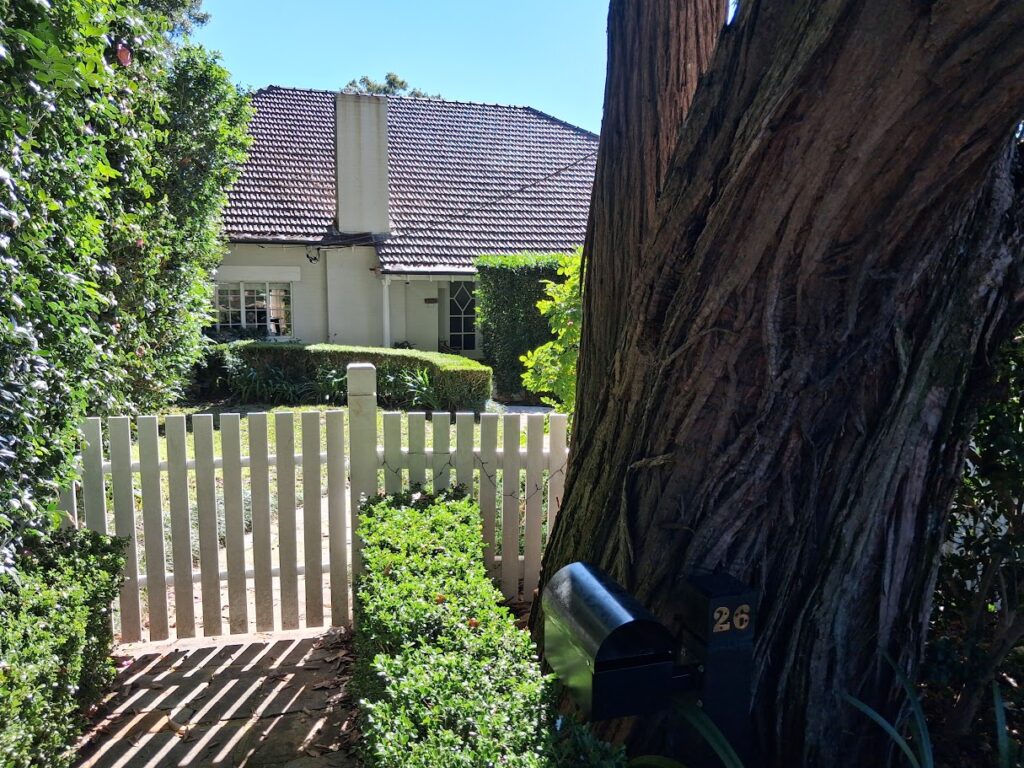
26 Park Avenue, Gordon – former home of Annie Forsyth Wyatt OBE, founder of the National Trust (NSW)
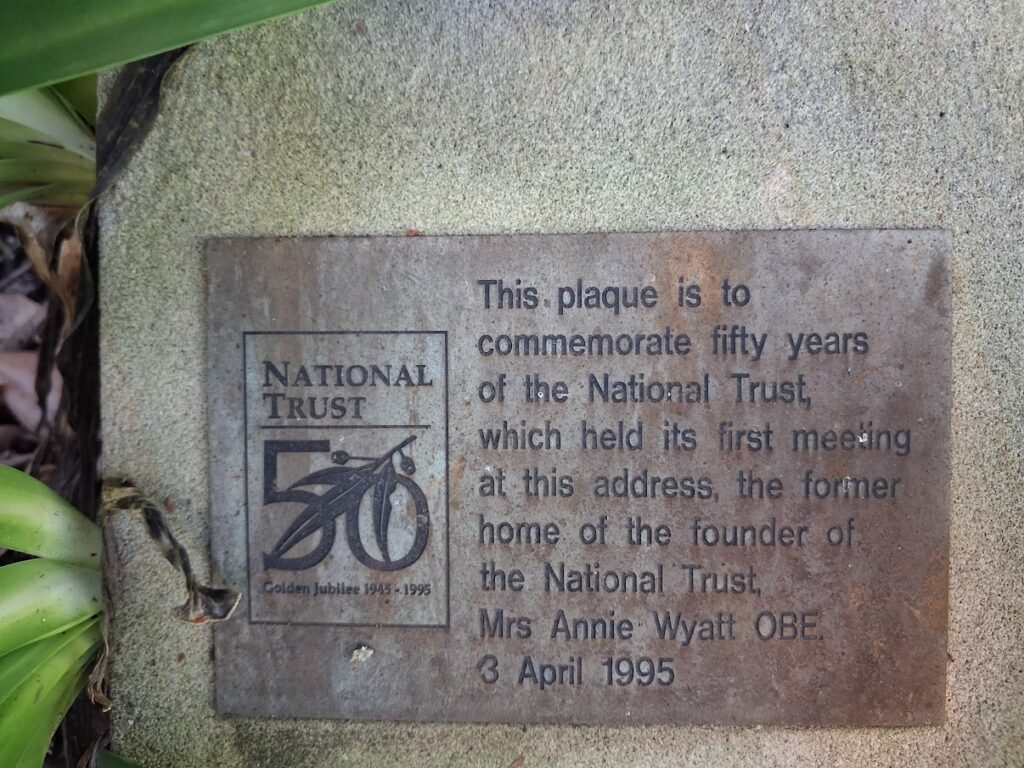
Plaque dedicated to Annie Forsyth Wyatt OBE and the 50th Anniversary of the National Trust (NSW)
This plaque is to commemorate fifty years of the National Trust, which held its first meeting at this address, the former home of the founder of the National Trust, Mrs Annie Wyatt OBE., 3 April 1995
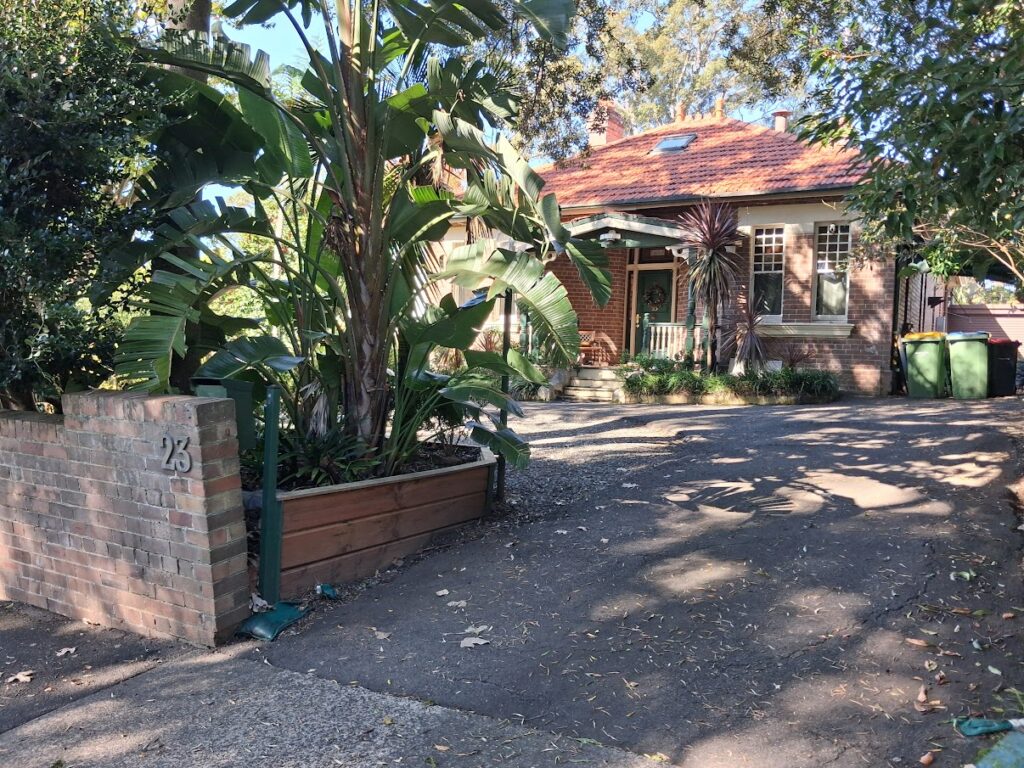
Former home of Dr J.C.C Bradfield, Chief Engineer of the Sydney Harbour Bridge and his wife Mrs Edith Margaret Bradfield (née Jenkins) who Annie Wyatt is reputed to have visited distressed about the dumping of garbage in the creek and who advised Annie Wyatt to do something about it by calling in concerned residents to discuss ways of addressing the problem.
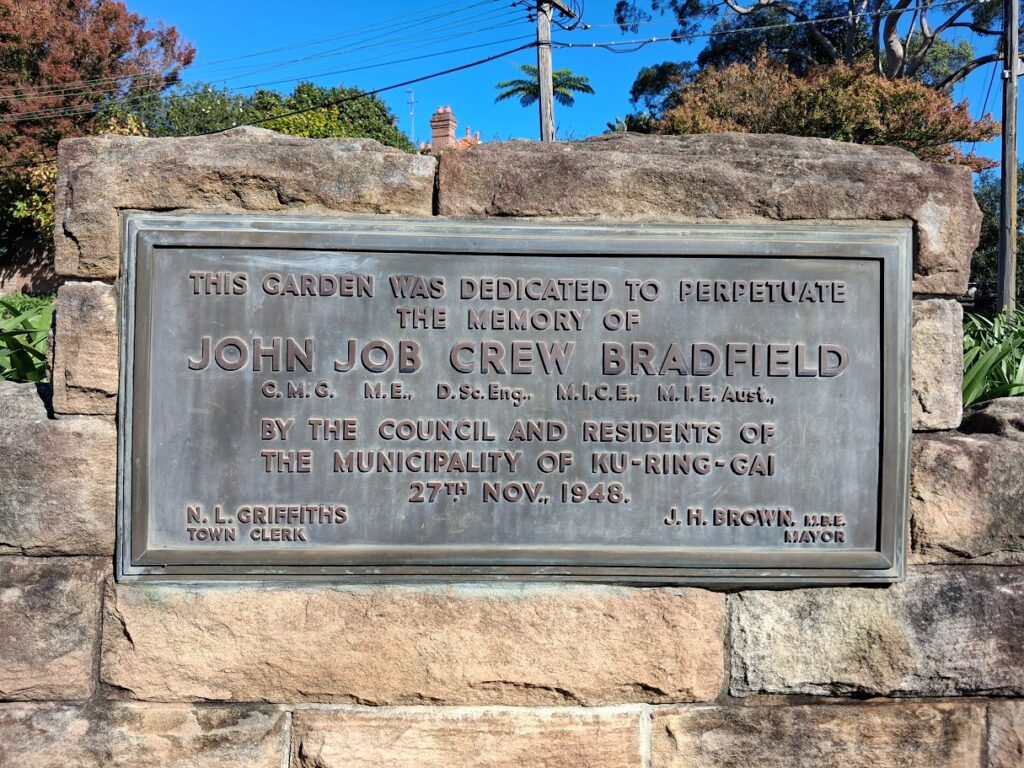
Memorial to John Job Crew Bradfield, corner of Park Avenue and Rosedale Road, Gordon
THIS GARDEN WAS DEDICATED TO PERPETUATE
THE MEMORY OF
JOHN JOB CREW BRADFIELD
C.M.G. M.E., D.Sc.Eng., M.I.C.E., M.I.E. Aust,.
BY THE COUNCIL AND RESIDENTS OF
THE MUNICIPALITY OF KU-RING-GAI
27th NOV 1948
N. L. GRIFFITHS
TOWN CLERK
J. H. BROWN
MAYOR
- Views to the Blue Gum High Forest in St Ives/Pymble from top of Rosedale Road
- Former NSW Premier Holman lived in house in Rosedale Road and his wife journalist and novelist Ada Holman (1869-1949).
https://en.wikipedia.org/wiki/Ada_Augusta_Holman
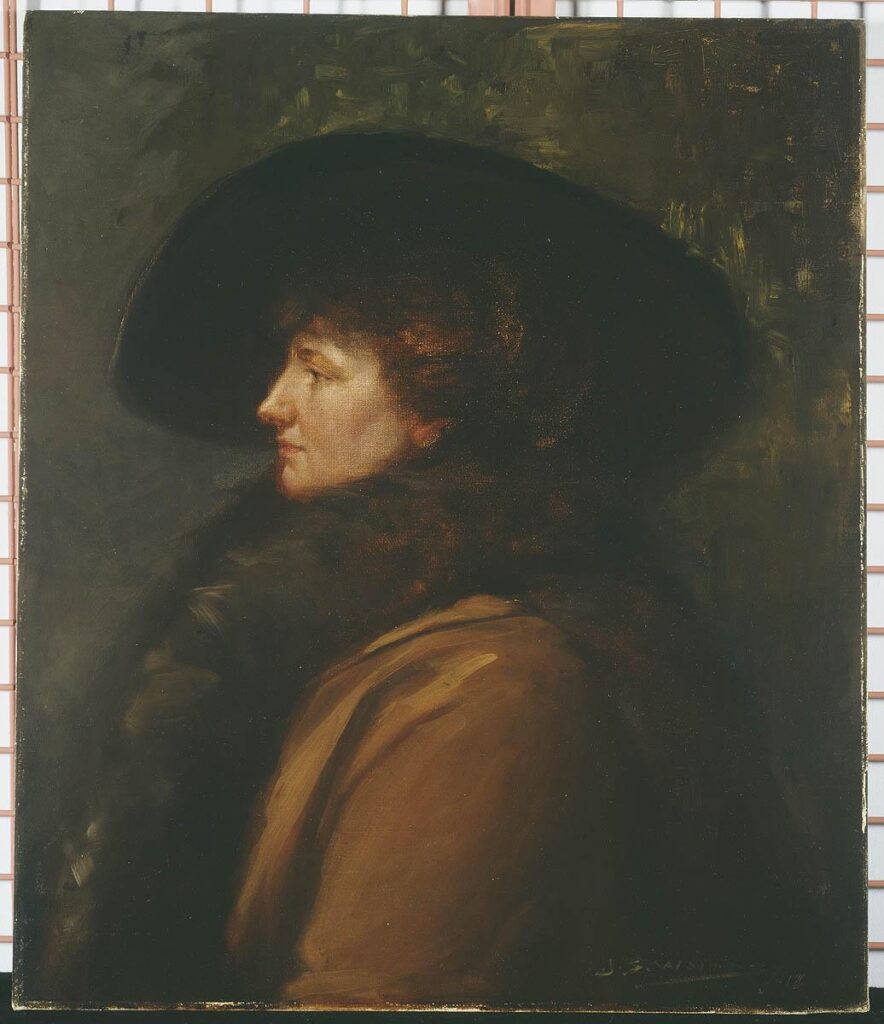
Mrs W. A. Holman, 1917, painted by John Samuel Watkins, 1917. On display – Paintings from the Collection, Room 3, West Wall, no. 232. Mitchell Library, State Library of New South Wales
Mrs WA Holman 1917
By John Samuel Watkins
Feminist Ada Kidgell was a versatile writer who contributed to various newspapers, as well as publishing children’s fiction and an autobiography.
Ada was well-informed on contemporary political issues. She rejected inequality in all forms, supported a republic, was a critic of the Constitution and opposed involvement in the South African war. In 1901 she married politician William Holman, Premier of NSW from 1913 to 1920. She continued her journalism but was frustrated by the restrictions on what she could publish. Her work often explored the tensions in a marriage when a wife is forced to suppress her interests.
In 1917 John Watkins completed this dramatic profile portrait. It shows Ada wearing a large black hat set at a fashionable angle over her rich auburn hair.
7 June 2022 (Budget Reply/Aboriginal Protection Debate): During a broader historical acknowledgement of policy impacts in NSW, Chris Minns referenced how the 1915 Labor Government led by William Holman introduced amendments to the Aborigines Protection Act, reflecting on the painful history of the Stolen Generations and the Parliament’s historical role in enacting laws that caused immense grief to Indigenous Australian:
CHRIS MINNS: When this Parliament passed its unanimous apology, it also rejected that offensive denialism. This Parliament acknowledged the role it played in separating Aboriginal children from their families—how, for a century, this Parliament enacted laws that inflicted grief, suffering and humiliation on Indigenous Australians. As a member of the Australian Labor Party, I must also acknowledge the role our party played in this dark history. In 1915 the New South Wales Labor Government of William Holman introduced a bill to amend the Aborigines Protection Act. That legislation gave the New South Wales Aborigines Protection Board new powers that the board had long asked for, including the power to remove any Indigenous child at any time for any reason. The bill reads:
The Board may assume full control and custody of the child of any aborigine, if after due inquiry it is satisfied that such a course is in the interest of the moral and physical welfare of such child. The Board may thereupon remove such child to such control and care as it thinks best.
As if the legislation was not clear enough, the Colonial Secretary, John Henry Cann, said in his second reading speech:
The main principle embodied in the proposed amendments is actually to empower the board to take the place of the parents.… It is not a question of stealing the children, but of saving them.
At the end of his speech, the Secretary provided a clear statement of Parliament’s ultimate objective, which goes well beyond child welfare. He said:
… the aboriginals will soon become a negligible quantity and the young people will merge into the present civilisation and become worthy citizens.
For this legislation, passed by a Labor government; for forcibly separating Aboriginal children from their families; and for claiming it was done for the children’s own good, I say unreservedly that I am sorry. It is my sincere hopethat members of the Stolen Generation here today accept this apology on behalf of our party. As this Parliament did a generation before, we must follow up words with action. Bob Carr’s motion committed this Parliament to the goals and processes of reconciliation. We must use this anniversary to renew our commitment to this goal of achieving a just reconciliation with our First Nations people.
While this Parliament’s apology was historic and healed many, we still have much work to do. The statistics for Indigenous people remain sobering; their life expectancy is 8.2 years less than the general population, there is a 25 per cent gap in year 12 attainment, nearly a 30 per cent gap in tertiary education completion and there are many more difficulties that statistics cannot tell us about the discrimination that First Nations people have to overcome each and every day. These are confronting facts, but ones we cannot shy away from.
Tuesday, 7 June 2022 Legislative Assembly Page 8959
Roberts Grant Conservation Area(PDF, 79KB)
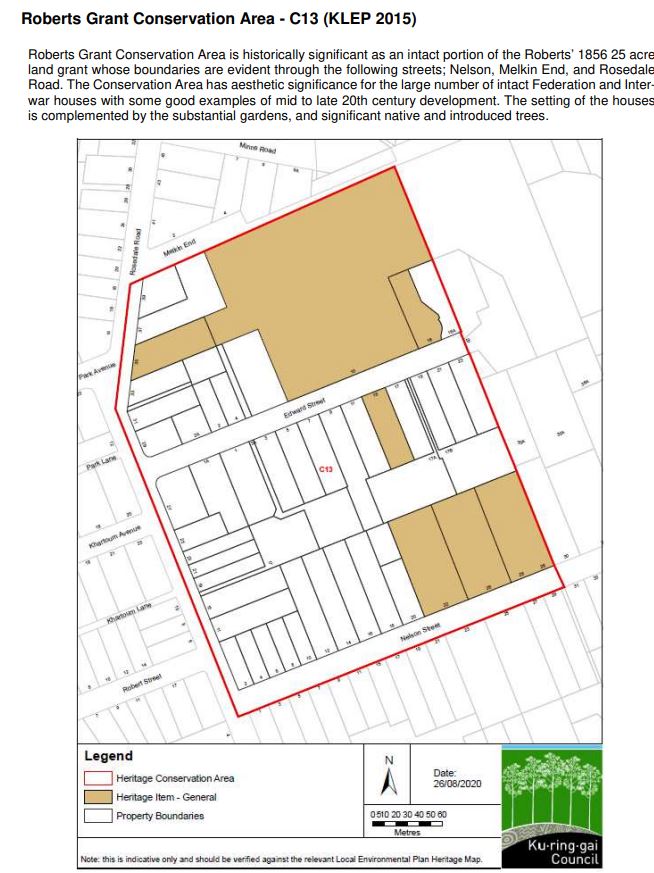
Khartoum Street
Khartoum Street is probably named after the Siege of Khartoum, (March 13, 1884–January 26, 1885), that was a military blockade of Khartoum, capital of the Sudan, by al-Mahdī and his followers. The city, was defended by an Egyptian garrison under the British general Charles George (“Chinese”) Gordon, who was eventually captured, and its defenders, including Gordon, slaughtered. This caused a political storm against the alleged inaction of the British government under Prime Minister William Gladstone.
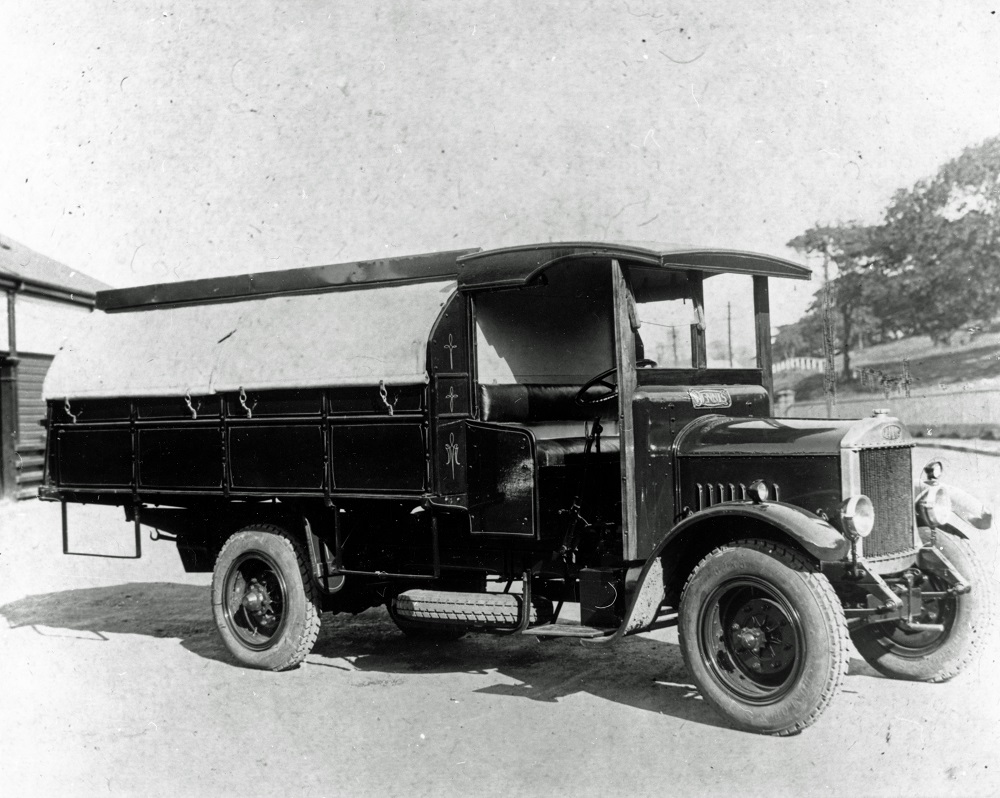
Ku-ring-gai Shire Sanitary Wagon ca, 1928
From Ku-ring-gai Council Gordon and Killara image gallery
Khartoum Lane was built as a “dunny lane”.
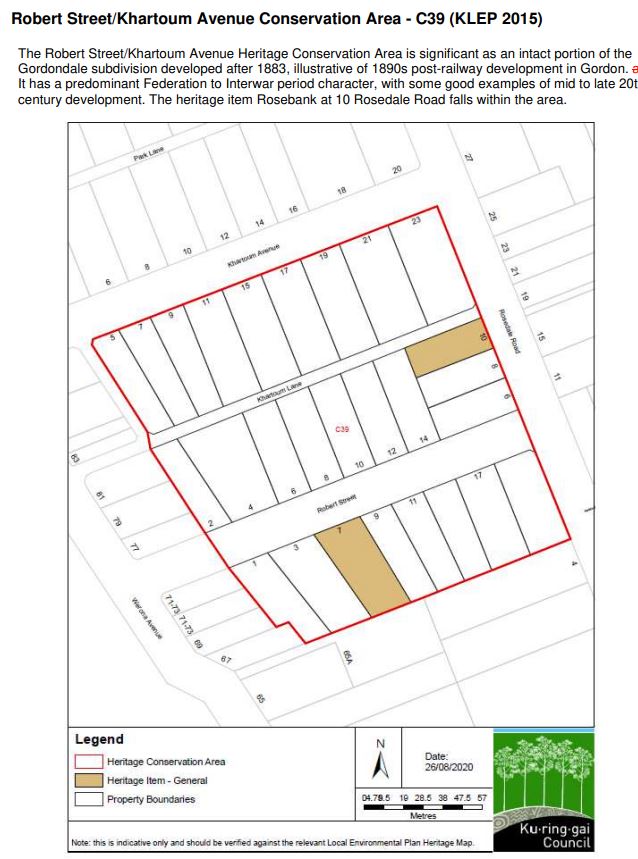
Robert Street
Gordon Recreational Park
- Location of the former Gordon Picture Theatre
- August 2021 Newsletter Vol. 39 No. 6
Cinemas in Gordon
Ku-ring-gai Historical Society Inc Newsletter, August 2021 Newsletter Vol. 39 No. 6:
It is reported that the first screening of a film in
Gordon was in 1910/1911 by Mr Genernazzi of
Chatswood, in an open-air facility on land on the
east side of the Pacific Highway opposite the St
John’s Anglican church. It had a wooden floor and
seating for 200. If there were more patrons the
adjacent fruiterer would hire out fruit cases for
standing patrons.
In 1919 land was purchased in Werona Avenue, on
the northern boundary of Gordon Park, for the
building of a picture theatre. On the site was built a
large tin, weatherboard and fibro building with a
bitumen floor, which was called the Empire
Pictures. With a small orchestra, it operated until
- In addition to being used as a cinema, the
theatre was frequently used for community events.
When demolished, the Council acquired the seats
for use in public park
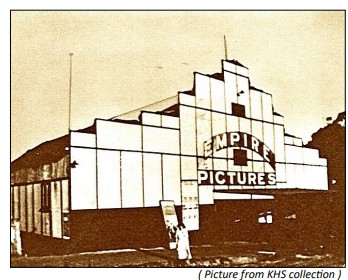
In May 1923, Gordon Theatres Ltd, a syndicate,
announced its intention to acquire the building
known as Empire Pictures to demolish the existing
building and erect a modern cinema. Called The
Gordon Theatre, the cinema opened in April 1924.
It had a dress circle and could accommodate about
1,500 patrons. There was an orchestra.
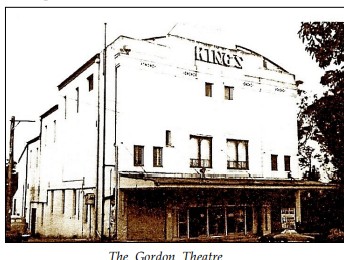
Like the Empire, The Gordon Theatre was used for
community events.
It proved to be a financial disaster and was placed
for auction at the end of 1928. It was passed in and
later sold privately.
Requiring the removal of 30 feet of the theatre’s rear
wall, a two manual, eight rank Christie organ was
installed. It had its opening on 14 October 1929.
Sound heads were added to the projectors and a
month later sound was introduced to Gordon with
the screening of The Idle Rich. Two weeks later,
Broadway Melody was screened.
In 1935 Kings, a small chain of theatres, took over
The Gordon Theatre on a lease. Alterations, heating
and additions were added. Its first screening with the
new name was on 25 October 1935. On Saturday
nights, the Pymble-Lindfield route 133 bus service
operated directly to the theatre. One of the terms of
the lease was that there should be weekly
performances on the organ of at least 25 minutes.
On 19 March 1936 Joan Hammond sang in a concert
to raise funds for her to study in Vienna. Lady
Gowrie (wife of the Governor) attended.
Henry Moon recalls that as a boy in the 1930s, he
used to go to the Saturday afternoon matinee when
there was a Popeye The Sailorman cartoon and got in
free because he had a badge to say he was a member
of the Popeye Club. With his friends he went to see
the serial Buck Jones of the Roaring West. When the
gun fights were on, he and his friends would join in
with throw downs.
For a number of years the reels of film were moved
between the Gordon Kings and Lindfield theatres
using the sidecar of a motor bike. In 1938 the Kings
chain took control of the Lindfield theatre which was
demolished in 1968 to be replaced by Coles
Supermarket. With Chatswood theatre the Kings
chain was enlarged.
The upkeep of the theatre deteriorated since its
refurbishment in 1935-36. In February 1955
Ku-ring-gai Council served a notice under the Public
Health Act, citing that the theatre was damp and in a
state of disrepair with inadequate ventilation,
defective down pipes, torn curtains and carpets. In
July, the seats were found to be inadequate.
The list of needed remediation grew and the cost of
repair increased. Despite ownership changes, its end came quickly and without fanfare. A few days’ notice
was given that the final screening would be on
Saturday 12 October 1963, with Ten Days to Rama and
The Lion. Neither film was much of a drawcard and
the theatre was not full despite a ticket cost of two
shillings to any part of the theatre. The theatre was
quickly stripped, with some seats going to the
Marion Street Theatre. After the shell was gutted, the
walls came down in 48 hours.
The mighty Christie organ was sold to St Columb’s
Church, Ryde where it was used for 30 years,
ultimately being acquired by the Theatre Organ
Society of Australia.
The Chief Secretary’s Department noted on its file,
that a block of flats would replace the last of the
entertainment halls that had occupied the site from
the early days of cinema.
Happy memories for some members of our Society.
Material sourced from Trove and
The Historian Vol 36 No 1, 2007
Morrison Hammond
Nelson Street
McIntosh Street
- Gordon Park Estate McIntosh Ansell Grant Conservation Area(PDF, 184KB)
- Eryldene is State Heritage Register in the Colonial Revival style designed by Hardy Wilson
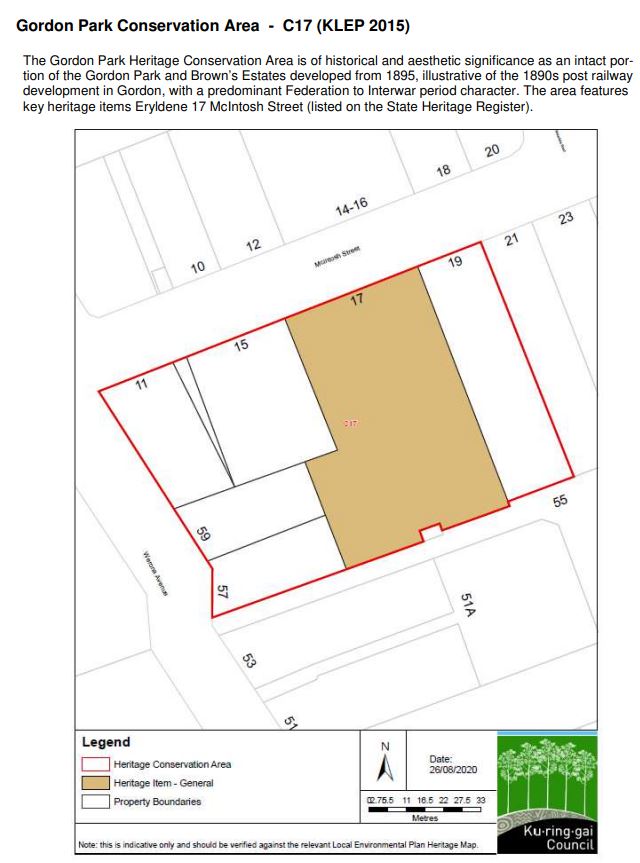
Werona Avenue
- Location of the former Gordon Picture Theatre. More information HERE
- First film screening opposite St Johns Church – as an open air theatre
- The New Empire Theatre was opened in May 1924 at 65 Werona Avenue, Gordon. It was designed by architect Guy Crick. The cinema was equipped with a Christie 2Manual/8Ranks organ, which was opened on 14th October 1929 by organist Idwal Jenkins. For many years, the resident organist was Miss Valda Kersey.
- In the 1930’s the cinema was re-named Kings Theatre. Always independently operated, the Kings Theatre was closed on 12th October 1963 with Horst Buchholz in “Nine Hours to Rama” & William Holden in “The Lion”. It was soon demolished.
- The Gordon Theatre was built on the site of a former timber and fibro structure, Empire Pictures, that operated from 1919 until 1923. Alfred Blackmore was a director of Gordon Theatres Limited and his wife cut a ribbon joining the stage curtains at the opening ceremony on 24 April, 1924. The building provided seating for 1,362 and was used for various forms of live entertainment as well as films. By 1928 poor patronage forced a sale to Percival Garling (a later founder of Butler Air Transport) and the theatre was managed by his son Rus Garling. The management acquired a Christie theatre organ at a cost of £7,800. The organ had originally been ordered for the Lyceum theatre, Sydney, but there had been a delay in its installation. The rear wall of the theatre was removed and two chambers, 2m deep, were added at about 2m above stage level. The console was located directly in front of the stage, on a platform at floor level in the centre of the sunken orchestra pit. In 1934 the theatre was leased to the Kings chain of suburban cinemas, and new Art Deco adornment of the auditorium was undertaken. It was a condition of the lease that there be a weekly organ performance of at least 25 minutes. In February 1944 the theatre’s lease was transferred to Austral American Productions although the Kings name remained. By 1948 ownership passed from the Garlings to Oscar Shaft and in 1956 to M R A Pacey. By 1956 the organ had remained silent for some years. A new wide screen in front of the original proscenium, covering the former orchestra pit and Christie console, was installed in 1956 to cater for CinemaScope. The film, The Swan, was the first to be shown in CinemaScope at the Gordon Kings on 6 and 7 July 1956. The organ, which had been brought out and revived for about six months from July 1955, had badly deteriorated and in 1958 was sold to St Columbs Anglican Church, West Ryde. (Source: Rod Blackmore’s Australasian Theatre Organs, New South Wales section [online].)
Edward Street
The Lady Gowrie Red Cross Home, between Melkin End and Edward Street, opened in 1941 as a convalescent home for returned military personnel. Today, the site has been redeveloped into the Anglican Gordon Quarter, which features retirement living units and the Roden Cutler Lodge residential aged care facility.
The site where Lady Gowrie stands once was the grounds of two former homes, ‘Pittmedden’ and ‘Cheshunt’. These properties were purchased by John Woolcott Forbes in 1936 and subsequently demolished for a new house called, ‘Burnham Thorpe’.
John Woolcott Forbes (born Benvenuto Louis Brandi, c. 1903–1985) was a notorious Australian financier and prominent con artist. He made headlines in the 1930s and 1940s for his highly publicized corporate frauds and his extravagant lifestyle, which included building the spectacular 32-room Burnham Thorpe mansion.
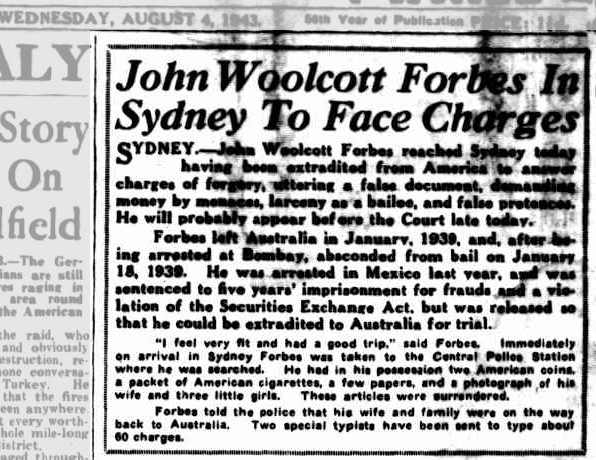
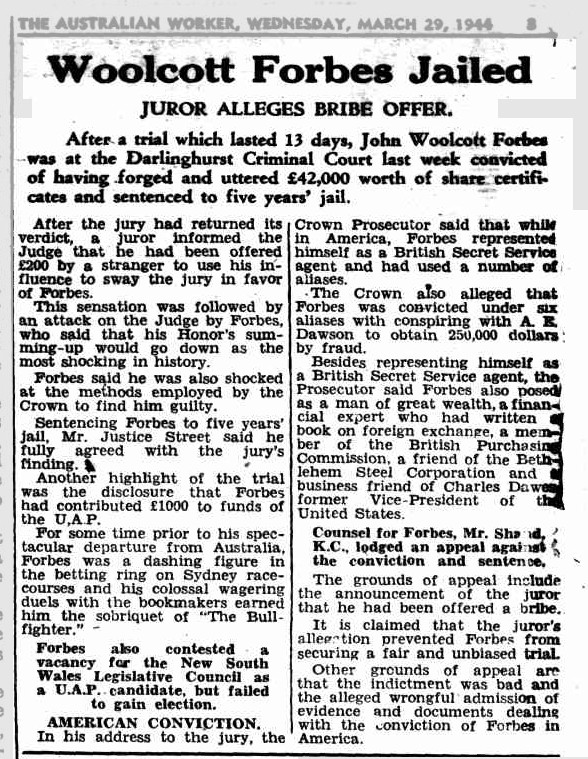
Born Benvenuto Louis Brandi, he arrived in Sydney as a young man with no money or connections and reinvented himself as the charismatic and wealthy stockbroker John Woolcott Forbes.
He set up the Producers and General Finance Corporation but used it to defraud shareholders and wealthy individuals through extensive financial scheme.
Facing fraud charges in 1939, he fled Australia on a ship. He was arrested in Bombay (Mumbai), skipped bail, and was tracked through Paris, Canada, Mexico, and New York before being arrested in Mexico and extradited back to Australia.
After a 13-day trial at the Darlinghurst Criminal Court, he was convicted of forging and uttering £42,000 worth of share certificates and sentenced to five years’ jail in 1944
The Burnham Thorpe building was purchased by the Red Cross Society in 1940 and opened as Lady Gowrie home in 1941 and It was named after Lady Zara Hore-Ruthven (Gowrie) an advocate for early childhood development led to the creation of the Australian Association for Pre-School Child Development (AAPSCD) and the establishment of Lady Gowrie Child Centres across the country.
The NSW Division of the Red Cross Society purchased the property at 10 Edward Street, Gordon, to serve as a convalescent home for Australian Imperial Force (A.I.F.) soldiers returning from World War II. They named in Lady Gowrie in honour of Lady Zara Gowrie (1879–1965) wife of the then-Governor General of Australia, Lord Gowrie. She was noted for her dedication to the welfare of women and children in Australia and was a keen horticulturist.
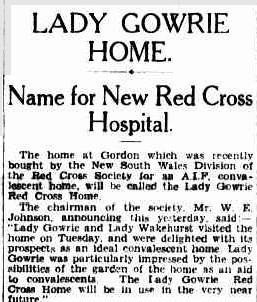
The Sydney Morning Herald, Friday 27 September, 1940
Lady Gowrie and Lady Wakehurst visited the site in September 1940 and were impressed with its potential to help soldiers recover, particularly due to its large, peaceful gardens
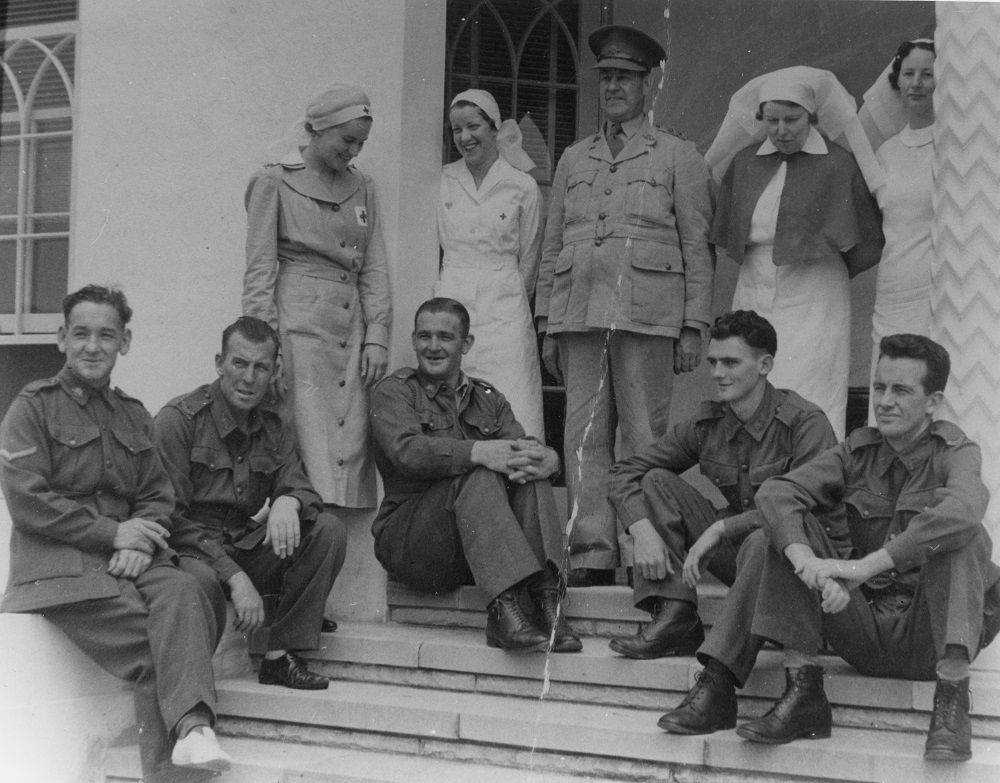
First patients and Staff at Lady Gowrie 1940
From Ku-ring-gai Council Gordon and Killara image gallery
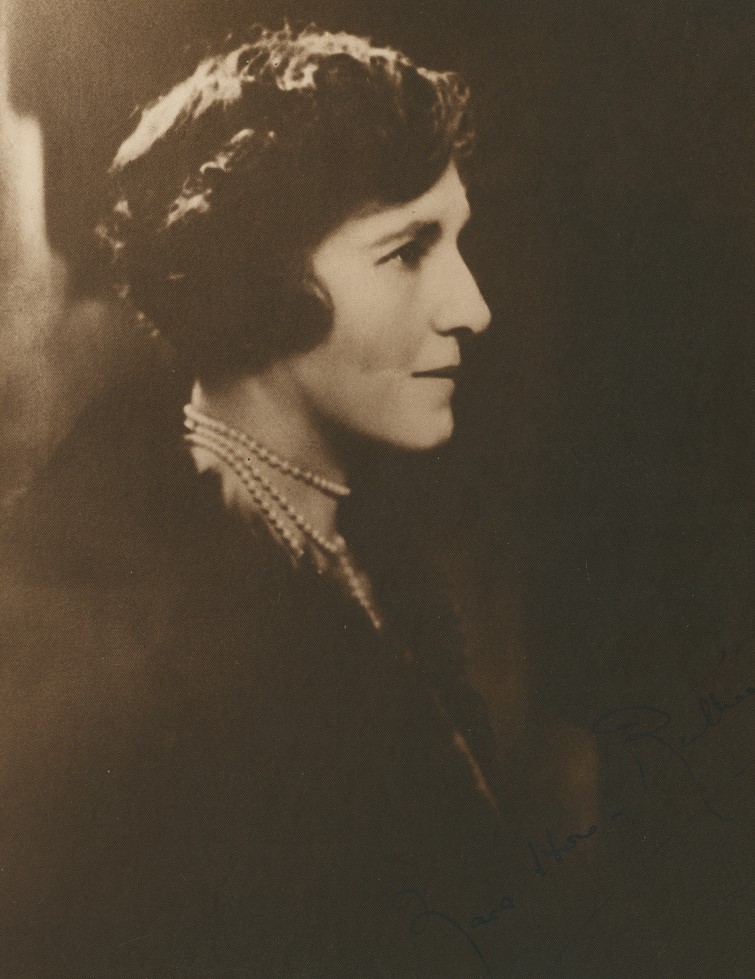
Countess Gowrie, whose husband was the 1st Earl of Gowrie, Governor of South Australia 1928–34, Governor of New South Wales 1935–36 and the longest serving Governor-General of Australia 1936–44.
Lady Gowrie was an advocate for promoting the health and wellbeing of Australian children, particularly disadvantaged children. Around 1939, ‘Lady Gowrie Child Centres’ were established by the Commonwealth Government in capital cities to demonstrate exemplary benchmarks of quality in early childhood practice.
In early 1941, Tatsuo Kawai took up his post as Japan’s first Ambassador to Australia. He met Lady Gowrie and offered to present her with a bonsai pine tree. Australia declared war on Japan in December 1941, and Kawai was placed under house arrest pending repatriation to Japan.
In 1942, Lady Gowrie was advised by Sir John Latham, Australia’s former representative in Tokyo who was returning to Australia to resume his post as Chief Justice of the High Court of Australia, that Kawai now wanted to honour his offer. She indicated she would be delighted to accept the gift, even though the two nations were now at war and over 20,000 Australian soldiers were in Japanese captivity following the fall of Singapore. Her reply to Kawai was stopped by the Secretary of the Department of External Affairs, and the bonsai tree was never presented to her.
https://en.wikipedia.org/wiki/Zara_Hore-Ruthven,_Countess_of_Gowrie
The Lady Gowrie residential aged care village was redeveloped and today known as Anglicare’s Gordon Quarter village. It include
Roden Cutler Lodge. It is set amongst natural bushland the grounds include heritage-listed buildings. Its redevelopment was completed in early 2022.
During construction, the site was subject to two ‘mini tornado’ storms which damaged many trees. The company Arboreport were the tree management consultants for the redevelopment of the site.
Following a six-year redevelopment of the historic Lady Gowrie village, the re-named Gordon Quarter features 40 retirement living units, a heritage-listed mansion and a 107-room Roden Cutler Lodge residential aged care home, set amongst natural bushland. In 2024 it received has received the Urban Development Institute of Australia NSW (UDIA NSW) Award for Excellence in Retirement Living.
At the heart of the village is the heritage-listed Mediterranean-style mansion – Burnham Thorpe – which was converted into eight retirement living units and retains historical features including the chandelier, grand cascading staircase and heritage ballroom with the original sprung floor.
Ku-ring-gai Bat Colony and Nesting Site for Powerful Owls
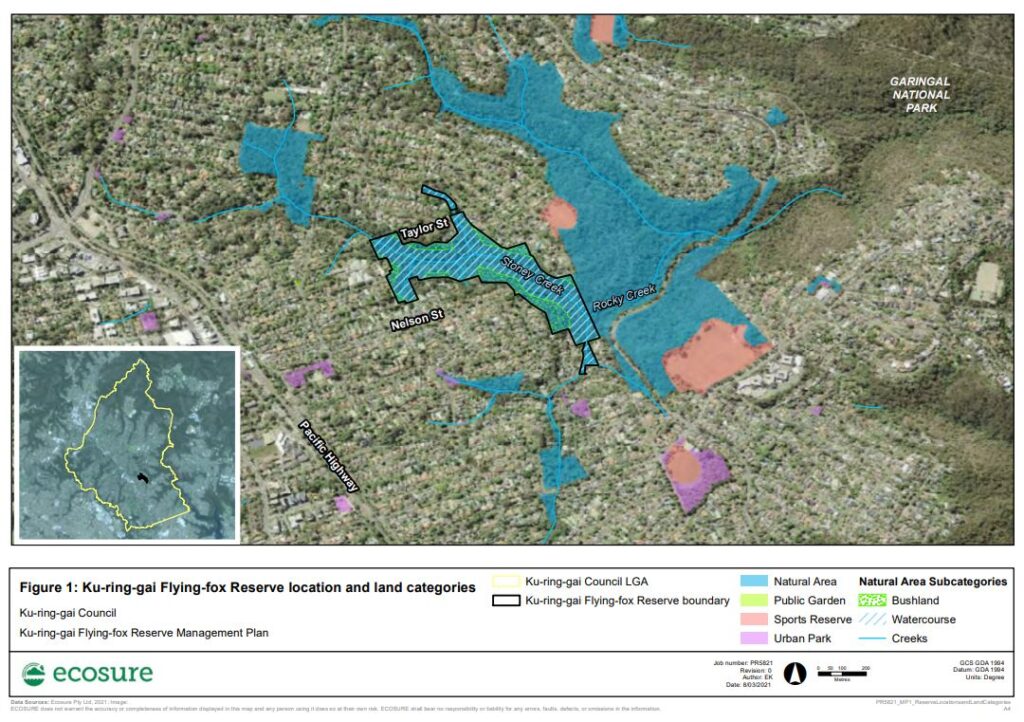
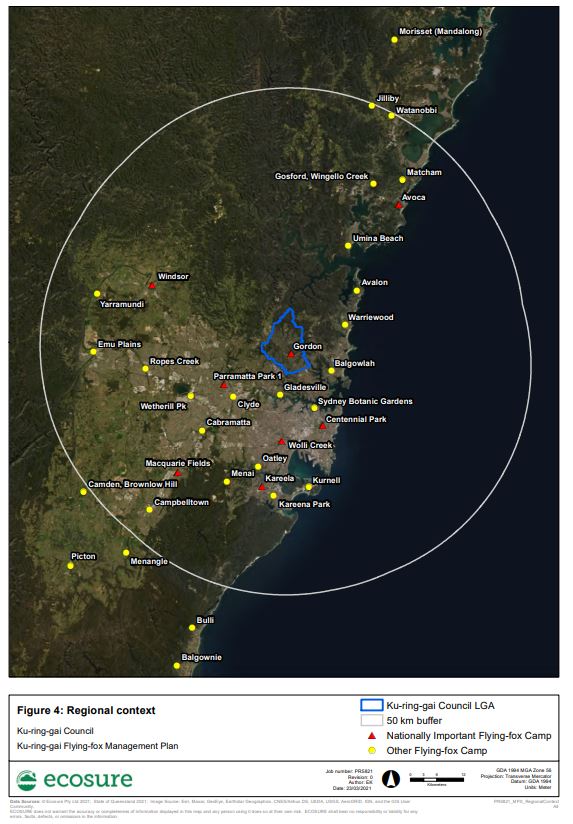
Gordon is home to Sydney’s largest flying fox colony and the Council in conjunction with the Heritage Council of NSW acquired land in Gordon in 1986 to preserve the existing colony of grey-headed flying foxes. Recently a portion of land adjoining Flying Fox Reserve was acquired by Ku-ring-gai Council to further safeguard the flying foxes, which are now listed as a threatened species.
Sydney Turpentine-Ironbark Forest
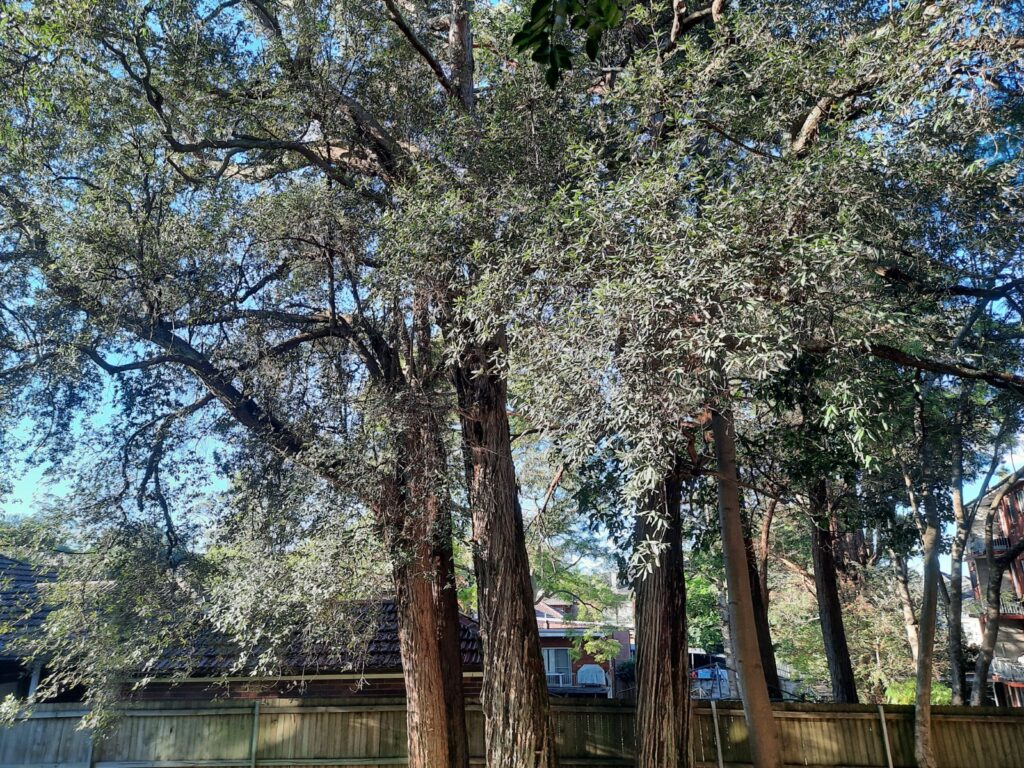
Sydney Turpentine-Ironbark Forest (STIF) is often found on the edges of Blue Gum High Forest and is dominated by Turpentine, Eucalypts and Ironbarks, together with smaller trees such as the Parramatta Wattle and White Dogwood, and a mixture of grasses.
Communities listed as critically endangered are deemed to be facing an extremely high risk of extinction in the near future.
This forest provides layers of habitat for wildlife, with mature trees providing nest hollows for Australia’s largest owl – the Powerful Owl and also for the Glossy Black-Cockatoo.
The combined area of STIF and BGHF once covered 46,000 hectares, but just 0.5 per cent of the original STIF remains in Ku-ring-gai due to land clearing. In Ku-ring-gai it is found along Mona Vale Road, St. Ives, the southern end of Fox Valley Road and Bicentennial Park.
Minns Street
Australian artist, Benjamin Edwin Minns (1863-1973) lived at Gordon and the street is named in his honour.
B.E. Minns was introduced to art by the young Charles Conder, with whom he shared rooms in the 1880s. He soon developed a successful career as the first significant freelance Bulletin cartoonist. He is also remembered for his sensitive watercolours. Subjects include Aboriginal and suffragette themes, as well as landscapes and portraiture.
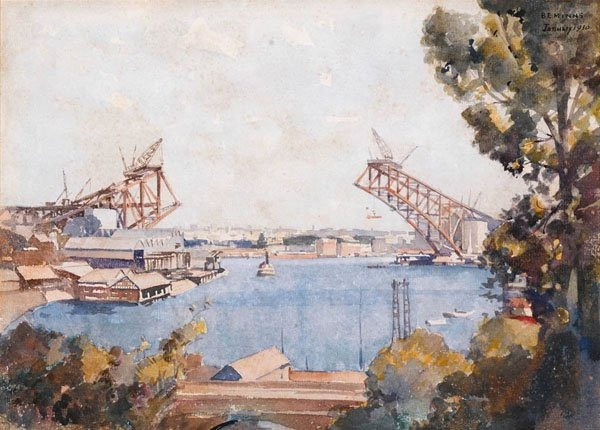
Benjamin Edwin Minns – The Harbour Bridge

https://en.wikipedia.org/wiki/Benjamin_Edwin_Minns
Background
FOKE held a 2025 Australian Heritage Festival “Gordon Heritage in Peril” walk highlighted Gordon’s unique character —its Federation homes, leafy streets, and historic landmarks like the railway station. At that time the Ku-ring-gai Preferred Scenario (3b refined), updated April 4, 2025, with 24,562 dwellings (… for Gordon) proposed building heights up to 8 storeys, posed significant heritage threats.
A May 2025 deadline, was agreed by the Ku-ring-gai Council Vs NSW Planning Minister’s Mediation Agreement, with little time for community to make submissions on the major changes. There was also concern about State Significant Development (SSD) proposals that could further undermine heritage preservation. Despite Ku-ring-gai Councill requesting the DPHI to reject current SSD applications and impose a moratorium on new ones, this did not happen.
FOKE encourages you to support heritage conservation efforts, such as advocating for stronger HCA protections and interim heritage orders.
Summary
Key Issues from Friends of Ku-ring-gai Environment (FOKE) on Ku-ring-gai Council’s TOD Scenario 3b (Refined) for Gordon, 2025:
- Threat to Heritage Conservation Areas (HCAs) and Local Character
Preferred Scenario (pressured by DPHI and to be approved by NSW Minister for Planning) aims to protect all Heritage Conservation Areas by shifting development away from these zones, but FOKE is concerned that high-density development within 400–800m of Gordon Station could compromise the suburb’s heritage integrity. Gordon’s historic character, defined by its Federation and inter-war architecture and garden suburb layout, risks being eroded by overshadowing, visual intrusion, or pressure from adjacent high-rise buildings, which clash with the area’s low-density aesthetic. - Abandoning Federal, NSW and local environmental protections
FOKE is gravely concerned about the environmental impacts of the Preferred Scenario (pressured by DPHI and to be approved by NSW Minister for Planning) on Gordon’s critically endangered ecological communities, including the Blue Gum High Forest and Sydney Turpentine Ironbark Forest, both listed as critically endangered under state and federal legislation.
The intensified development risks further loss of tree canopy, vital for maintaining Ku-ring-gai’s biodiversity and mitigating urban heat. FOKE warns that clearing or fragmentation of these habitats, even indirectly through expanded development zones, could accelerate biodiversity extinction, threatening native species such as powerful owls, microbats, and other flora and fauna dependent on these ecosystems. The lack of comprehensive environmental studies exacerbates these risks, leaving Gordon’s ecological assets vulnerable. - Climate Threats, Particularly Bushfire Risks
FOKE is deeply concerned about the climate-related risks posed by Preferred Scenario (pressured by DPHI and to be approved by NSW Minister for Planning), particularly the increased bushfire threat in Gordon due to its proximity to bushland and the presence of dense vegetation, including Blue Gum High Forest and Sydney Turpentine Ironbark Forest. The intensification of development, with high-density buildings up to 800m from the station, could heighten bushfire risks by placing more residents in fire-prone areas without adequate mitigation measures. FOKE argues that the absence of climate risk assessments, including bushfire hazard studies, in the TOD planning process endangers Gordon’s community and undermines resilience to climate-driven extreme weather events.
Ku-ring-gai is the ‘lungs of Sydney’. Ku-ring-gai’s giant trees keep Sydney cool. More important than ever with extreme heat waves. - Insufficient Environmental and Infrastructure Studies
FOKE emphasizes the absence of critical studies (e.g., environmental, traffic, parking, water, sewerage, and utilities) to support the intensified development proposed in the Preferred Scenario (pressured by DPHI and to be approved by NSW Minister for Planning), which includes apartment buildings up to eight storeys (or 10 with affordable housing provisions) within 800m of Gordon Station. Without these studies, the scenario risks unsustainable development, straining local infrastructure and exacerbating environmental degradation. - Overdevelopment and Community Impact
The scale of development in the Preferred Scenario (pressured by DPHI and to be approved by NSW Minister for Planning), contributing to ~24,562 dwellings across Gordon, Killara, Lindfield, Roseville is viewed by FOKE as overdevelopment for Gordon (especially 800 metres from Gordon Station. Extending high-density zones to 800m from the station could disrupt the suburb’s low-density residential areas, leading to increased traffic, parking challenges, and reduced amenity for residents, prioritising state-mandated housing targets over local community needs. - Lack of Genuine Community Input and Transparency
Although the Scenario 3b was the community’s preferred option during the November–December 2024 consultation, FOKE questions the council’s process for selecting the refined scenario, suggesting it may not fully reflect community preferences. The condensed 21-day feedback period (ending April 22, 2025) restricted meaningful input from Gordon residents, particularly those within the 800m rezoning zone, whose concerns may be diluted by submissions from less-affected areas. - Undemocratic State Government Influence
FOKE views the TOD policy underpinning the Preferred Scenario (pressured by DPHI and to be approved by NSW Minister for Planning) as a top-down, state-imposed framework that overrides local planning controls. This approach limits Ku-ring-gai Council’s ability to protect Gordon’s unique environmental and heritage values, with the NSW Government’s push for high-density development near stations prioritising housing quotas over the suburb’s character and sustainability. - Undermining of Strategic Planning by State Significant Developments
FOKE is deeply concerned that State Significant Development Applications, processed by the NSW Housing Delivery Authority, bypass Ku-ring-gai Council’s strategic planning processes, including Scenario 3b’s framework. In Gordon, such developments could override local controls, leading to inconsistent, developer-driven projects that conflict with the council’s vision for balanced growth, heritage preservation, and environmental protection. - Failure to Provide Genuine Affordable Housing
FOKE criticised the Preferred Scenario’s approach to affordable housing, arguing that the provision for additional storeys (up to 10) in exchange for affordable housing lacks enforceable mechanisms to ensure meaningful outcomes. They contend that the TOD framework prioritises developer profits over delivering genuinely affordable housing for Gordon’s residents, particularly low- and middle-income households, risking the production of high-cost apartments that fail to address local housing needs. - Global Property Investments Overriding Community Interests
FOKE is alarmed that global investment in Ku-ring-gai’s property market, facilitated by the state’s TOD policies, overrides the interests of Gordon’s community. The push for high-density development in Scenario 3b attracts international developers and investors, driving up property prices and prioritising luxury apartments over community-focused housing. This trend threatens to displace local residents, erode community cohesion, and transform Gordon into a speculative investment hub, undermining its livable, heritage-rich character. - Corruption-Prone Development Processes
FOKE is concerned about the potential for corruption in the development processes associated with the NSW Government’s planning reforms, driven by the influence of powerful developer interests and the state’s streamlined approval mechanisms. The bypassing of local planning controls through State Significant Developments and the lack of robust oversight in the TOD framework create opportunities for undue influence, favoritism, or opaque decision-making. In Gordon , this could result in approvals that prioritise developer profits over community welfare, heritage preservation, or environmental sustainability, eroding public trust in the planning process. - Proposed Open Space Acquisitions as Insufficient Mitigation
Scenario 3b includes plans to acquire sites for open space to mitigate the impact of increased density. However, FOKE views these measures as inadequate to offset the environmental and social impacts of high-density development in Gordon, particularly given the potential loss of tree canopy and increased pressure on public amenities due to population growth. - Abandonment of Heritage in NSW
FOKE is highly critical of the broader trend of heritage abandonment in NSW, which they see as exacerbated by the Preferred Scenario (pressured by DPHI and to be approved by NSW Minister for Planning) and the state’s TOD, Low to Mid-Rise and dual occupancy policies. The prioritisation of high-density development over heritage preservation threatens Gordon’s significant Federation and inter-war architectural legacy. FOKE argues that the NSW Government’s failure to strengthen heritage protections, combined with weakened local planning controls, risks the irreversible loss of Gordon’s cultural and historical identity, aligning with a statewide pattern of neglecting heritage assets.
The ‘wicked problem’ of isolating heritage properties. - Poor Planning Practices
FOKE contends that the Preferred Scenario (pressured by DPHI and to be approved by NSW Minister for Planning) reflects poor planning practices, characterized by a lack of integrated, evidence-based strategies to balance growth with environmental and social outcomes. The absence of comprehensive studies on infrastructure capacity, environmental impacts, and climate risks, coupled with the rushed 21-day consultation period, undermines the planning process’s credibility. In Gordon, this results in a development framework that fails to account for the suburb’s unique ecological and heritage constraints, risking haphazard, unsustainable urban growth. - Undemocratic Nature of the NSW Housing Delivery Authority
FOKE is deeply concerned about the undemocratic nature of the NSW Housing Delivery Authority, which processes State Significant Developments and exerts significant influence over the Preferred Scenario (pressured by DPHI and to be approved by NSW Minister for Planning) implementation. The authority’s ability to override local council decisions and bypass community consultation undermines democratic governance in Gordon. FOKE argues that this centralized, developer-friendly approach prioritises state housing targets over the needs and voices of Gordon’s residents, eroding local autonomy and accountability. - Widespread Loss of Heritage and Character Across Sydney
FOKE emphasises that heritage tours, such as those organized in Ku-ring-gai, vividly illustrate what is at stake, showing residents the tangible heritage and character that will be lost under the Preferred Scenario (pressured by DPHI and to be approved by NSW Minister for Planning). This issue extends beyond Gordon, affecting every suburb and neighborhood across Sydney. The state’s TOD policies, which prioritise high-density development over local heritage, environmental, and community values, threaten to homogenize Sydney’s unique suburbs, replacing distinctive neighborhoods with generic high-rise developments. This widespread loss undermines the cultural, historical, and social fabric of the city, diminishing its livability and identity. - Cumulative impact of increased housing densification across Greater Sydney and how Sydney is an integrated landscape.
References
- Roseville Heritage in Peril Notes (26 April 2025)
- Lindfield Heritage in Peril Notes (27 April 2025)
- Killara Heritage in Peril Notes (3 May 2025)
- Ku-ring-gai Council Submission (No 159) to Inquiry into Development of the Transport Oriented Development Program, 28 March 2024
- Ku-ring-gai Council, Transport Oriented Development Program and Low and Mid-Rise Housing Provisions, Ordinary Meeting of Council, 20 February 2024
- Independent Heritage Advice – Proposed changes to NSW Planning Systems – Implications for Ku-ring-gai’s heritage by Lisa Trueman Heritage Advisor, 2 February 2024
- Ku-ring-gai Heritage Conservation Area Review, Prepared for Ku-ring-gai Council, October 2024 by TKD Architects, Tanner, Kibble & Denton
- Independent Assessment into the potential ecological impacts associated with the NSW Government Planning reform: the TOD SEPP and the Low-Mid rise Housing Policy (v1.0) by Land Eco Consulting, 6 February 2024
- FOKE’s Submissions and evidence tabled at NSW Upper House Inquiries https://www.foke.org.au/
- Ku-ring-gai Local Environmental Plan heritage listings: https://legislation.nsw.gov.au/view/html/inforce/current/epi-2015-0134#sch.5-pt.1
- Ku-ring-gai Historical Society https://khs.org.au/
- Gordon, Dictionary of Sydney https://dictionaryofsydney.org/entry/gordon
- State Library NSW, Ethel Turner’s Seven Little Australians
- How to trace your Ku-ring-gai house
- The Habitat Advocate, A Voice for Native Habitat since 2001
- AUDIO: Kathy Cowley from the Friends of Ku-ring-gai speaks to702 ABC Sydney, 25 May 2010
Kathy Cowley, Vice-President, Friends of Ku-ring-gai speaks to 702 ABC Sydney about the development approval for 4,5000 new homes on Sydney’s north shore
25/05/10 https://www.abc.net.au/news/2010-05-25/kathy-cowley-from-the-friends-of-ku-ring-gai/839698 - NSW Heritage Inventory: Search the NSW State Heritage Inventory (www.hms.heritage.nsw.gov.au) for the station’s official listing and detailed description
Transport Oriented Development (TOD) Background Information
- Read Council’s media release issued 5 December.
- The minutes of the Council’s May meeting
- Read the Council’s media release on the legal action
- View the Summons issued in the Land and Environment Court of NSW to the NSW State Government
- Read the Council meeting minutes here
- Read the Council media release here
- Read the letter from the Minister for Heritage here(PDF, 1MB)
- Read the Mayor’s response to this letter here(PDF, 2MB)
- Final Ku-ring-gai Council Submission – Transport Oriented Development Program(PDF, 7MB).
- Appendix 1 Community Engagement report(PDF, 2MB).
- Appendix 2 Hill Thalis Architecture and Urban Design Opinion(PDF, 3MB).
- Appendix 3 Lisa Trueman Independent Heritage Advice(PDF, 1MB).
- Appendix 4 Land Eco Consulting Independent Assessment of Potential Ecological Impacts(PDF, 3MB).
- Preparing alternative housing plans for the Transport Oriented Development (TOD) precincts.
- Working to establish a minimum lot size for dual occupancy development.
- Exhibiting a proposed Affordable Housing Policy.
- Council also took legal action against the TOD policy.
Transport Oriented Development (TOD) background information
- Read Council’s media release issued 5 December.
- The minutes of the Council’s May meeting
- Read the Council’s media release on the legal action
- View the Summons issued in the Land and Environment Court of NSW to the NSW State Government
- Read the Council meeting minutes here
- Read the Council media release here
- Read the letter from the Minister for Heritage here(PDF, 1MB)
- Read the Mayor’s response to this letter here(PDF, 2MB)
- Final Ku-ring-gai Council Submission – Transport Oriented Development Program(PDF, 7MB).
- Appendix 1 Community Engagement report(PDF, 2MB).
- Appendix 2 Hill Thalis Architecture and Urban Design Opinion(PDF, 3MB).
- Appendix 3 Lisa Trueman Independent Heritage Advice(PDF, 1MB).
- Appendix 4 Land Eco Consulting Independent Assessment of Potential Ecological Impacts(PDF, 3MB).
- Preparing alternative housing plans for the Transport Oriented Development (TOD) precincts.
- Working to establish a minimum lot size for dual occupancy development.
- Exhibiting a proposed Affordable Housing Policy.
- Council also took legal action against the TOD policy.
Ku-ring-gai Council’s Preferred Scenario for Gordon:
Ku-ring-gai Council sought community feedback on proposed changes to the Ku-ring-gai Local Environmental Plan (KLEP 2015), regarding a Preferred Scenario for Transport Oriented Development (TOD) around Roseville, Lindfield, Killara and Gordon stations between 31 March to 22 April 2025. This was after a public submission to consider five alternative scenarios in December 2024.
The KLEP 2015 has been the key planning document that guides how land can be used and developed across Ku-ring-gai. Central to this LEP is its zoning and planning control maps, which assess new development proposals and land acquisition.
Following the close of public exhibition on 22 April 2025, Ku-ring-gai Council is now preparing a new Local Environment Plan as an alternative to the NSW Government’s Transport Oriented Development (TOD) affecting the 400 metres surrounding Gordon, Killara, Lindfield and Roseville Railway Stations. This must be completed before May 2025 or otherwise the TOD controls will come into effect.
Ku-ring-gai Council’s artist impression of Ku-ring-gai Council’s Preferred Scenario for Gordon looking south-west, April 2025:
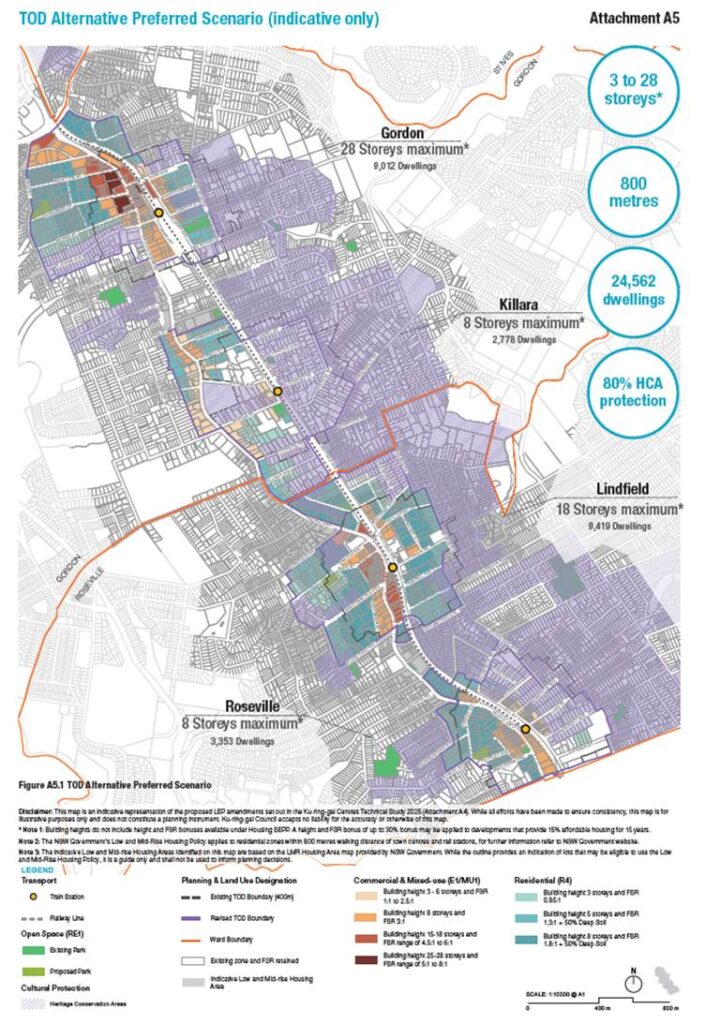
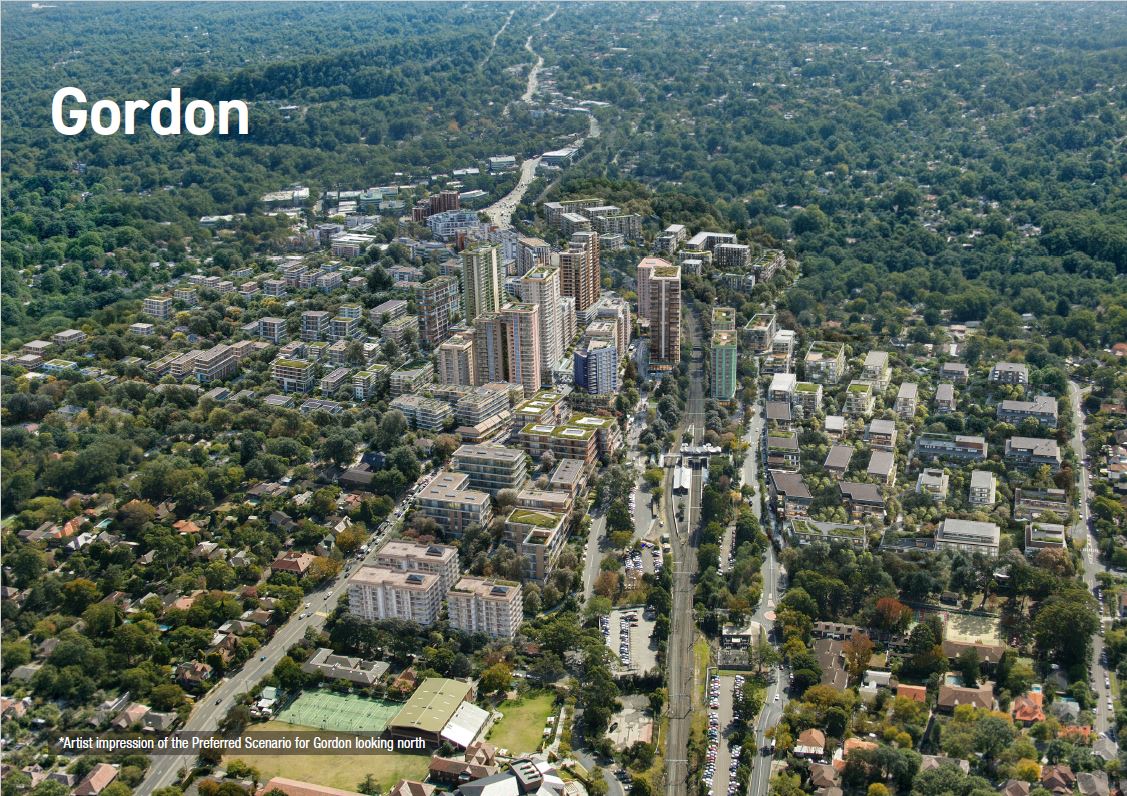
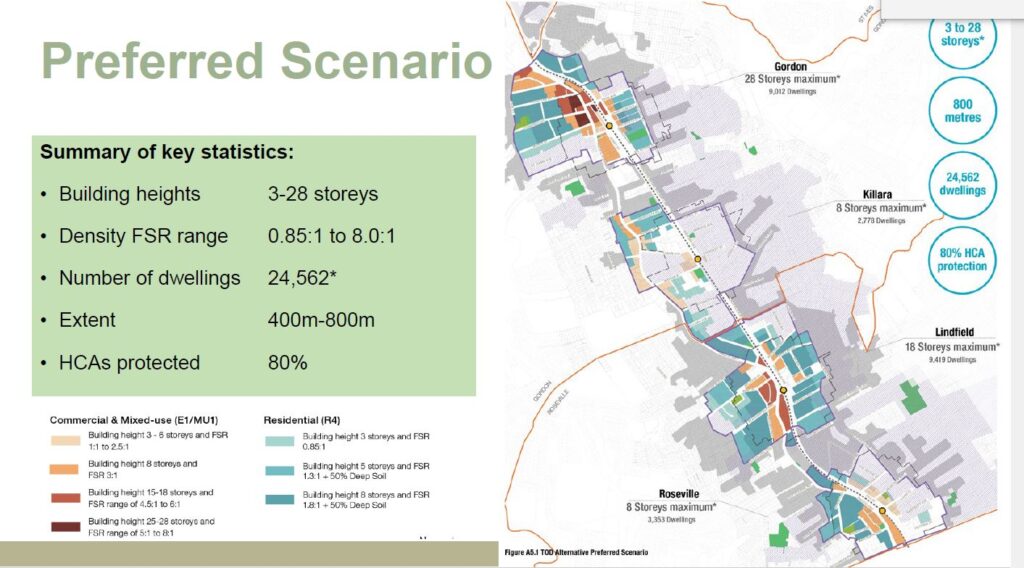
- Gordon: 9,012 dwelling target; 28 storey maximumRoseville: 3,353 dwelling target; 8 storey maximum
- Killara: 2,778 dwelling target; 8 storey maximum
- Lindfield: 9,419 dwelling target; 18 storey maximum
- Roseville: …
Ku-ring-gai Council’s Preferred Scenario for Gordon – Land Zoning recommended for the new Local Environment Plan:
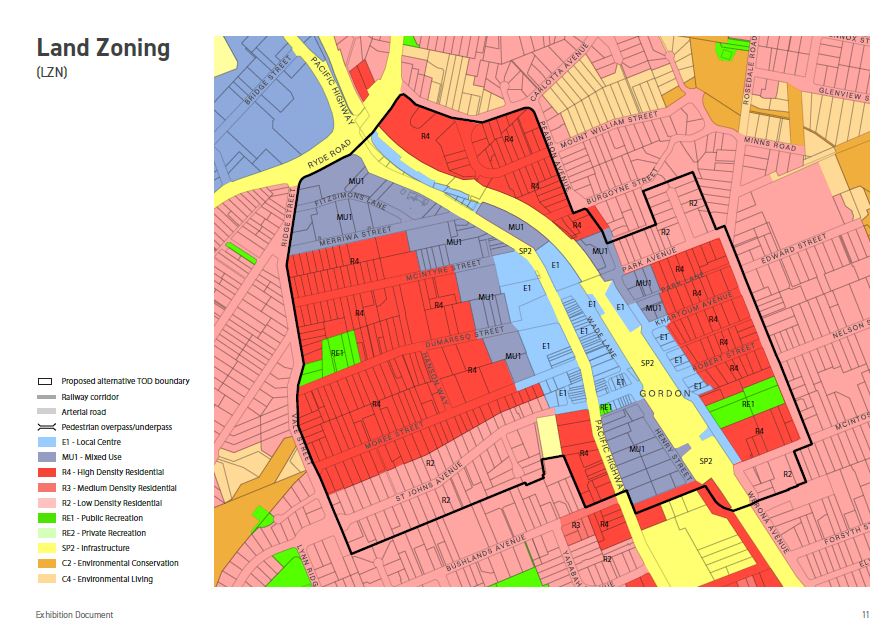
Ku-ring-gai Council’s Preferred Scenario for Gordon – Height of Building recommended for the new Local Environment Plan:
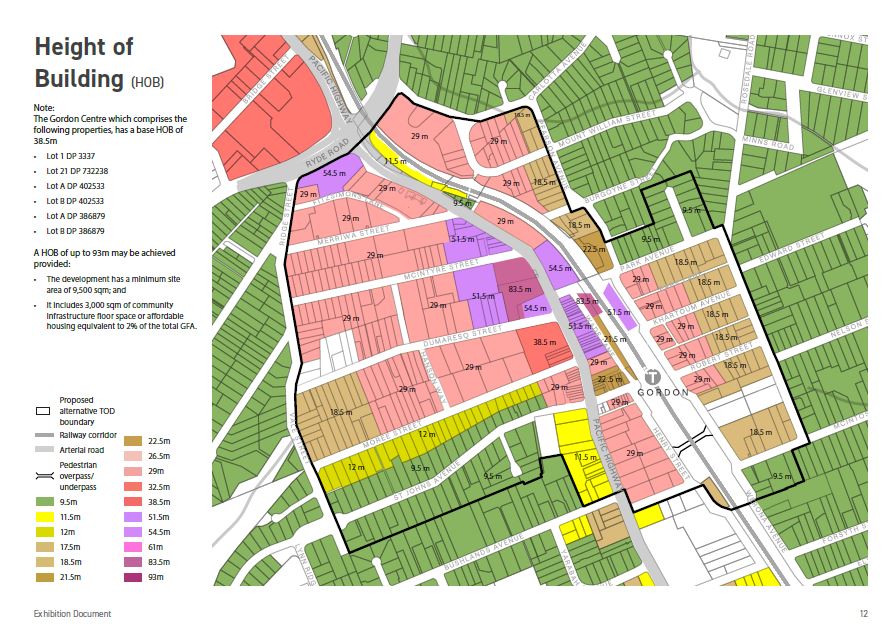
Ku-ring-gai Council’s Preferred Scenario for Gordon – Floor Space Ratio recommended for the new Local Environment Plan:
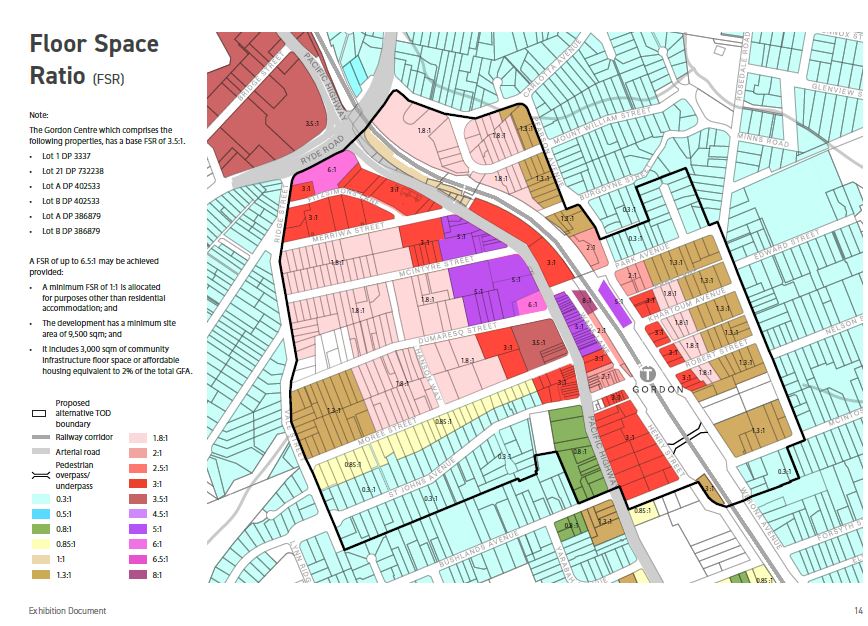
Ku-ring-gai Council’s Full Preferred Scenario for Gordon Report recommended for the new Local Environment Plan:
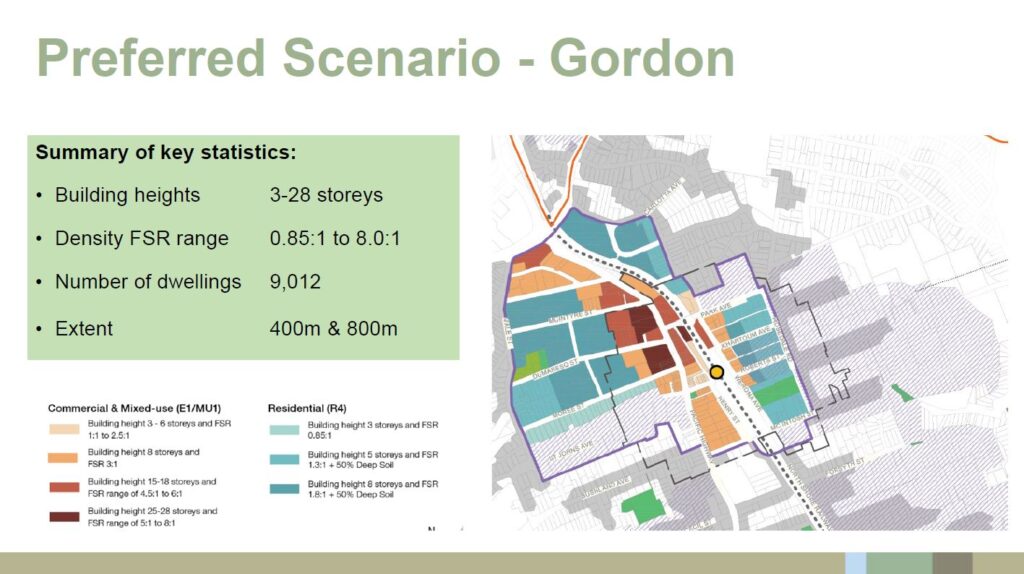
Ku-ring-gai Council’s Preferred Scenario Summary:
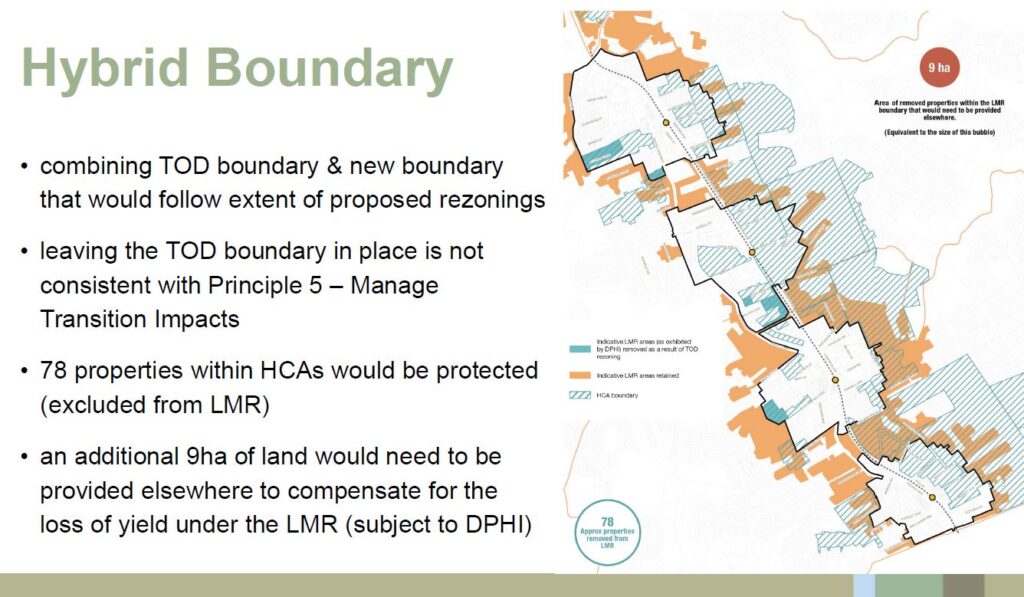
Showing the interaction between Ku-ring-gai Council’s Preferred Scenario and the (Blue: Indicative Low to Mid Rise Housing (LMR) removed as a result of TOD rezoning; Brown Indicative MR areas retained; Hatched: Heritage Conservation Boundary (HCA):
See the full Preferred Scenario Alternative to the TOD SEPP, Councillor workshop 26 May 2025:
Gordon is a part of a group of 4 ‘TOD’ Railway Stations’
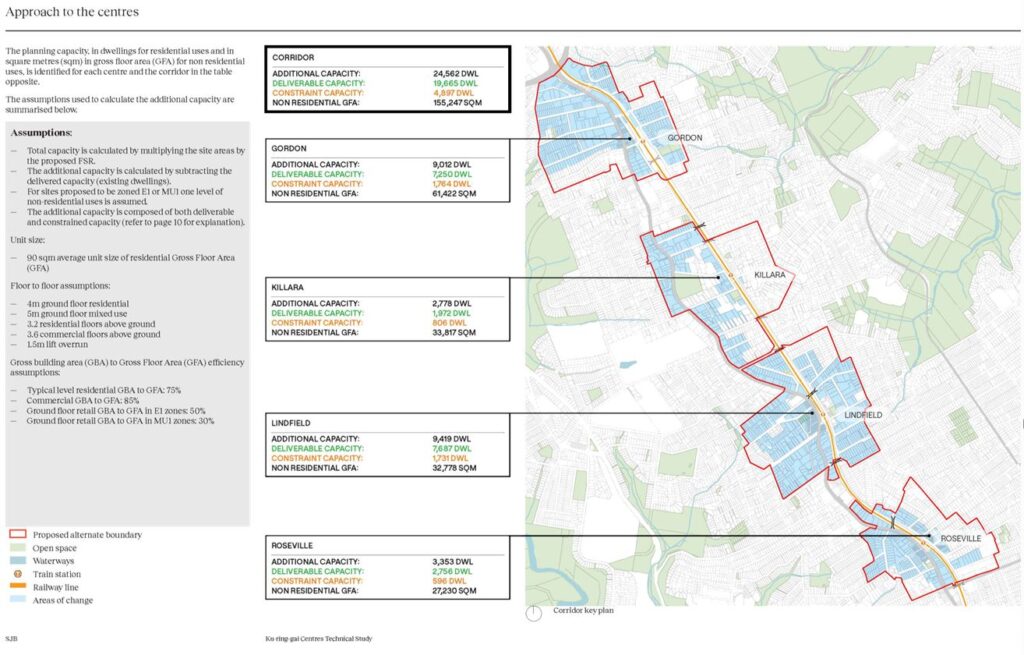
Appendix D_ Architectural Design Statement and SEPP …Download
Australian Heritage Festival 2025
The Australian Heritage Festival, 18 April-18 May 2025, focuses on the theme “Unearthed”, which focuses on revealing lesser-known histories and stories, such as FOKE’s 30 years of advocacy and connections to:
- 1920s: Ku-ring-gai resident, Annie Wyatt (1885-1961) forms the Ku-ring-gai Tree Lovers’ Civic League
- 1945: Ku-ring-gai resident, Annie Wyatt instrumental in forming the National Trust (NSW)
- 1997: National Trust (NSW) recommended 27 precincts in Ku-ring-gai be classified as Urban Conservation Areas (UCAs), more than any other local government area in NSW
- 2000: FOKE, Winner, NSW Heritage Office Cultural Heritage Conservation Award “Heritage Watch over our place of National Significance – Ku-ring-gai” Keep Australia Beautiful Council (NSW) (NSW) Metro Pride Award PRIDE Awards
- 2007: FOKE nominated Ku-ring-gai for the Australian National Trust’s “Most Endangered Places” list due to the NSW Government’s urban consolidation polices, which threatened Ku-ring-gai’s unique built and natural heritage. The National Trust of Australia (NSW) further underscored the national significance and vulnerability of Ku-ring-gai’s Urban Conservation Areas within the context of the Original Blue Gum High Forest by nominating them for the “Top Ten Heritage @ Risk Places in Australia”.
- 2008: NSW Government Heritage Volunteers Award
- 2008: FOKE produced A Photographic Record of Sites and Streetscapes, documenting ~2,000 homes, including many in Killara, threatened by state-mandated rezonings. Copies are archived at Ku-ring-gai Library, Ku-ring-gai Historical Society, and the National Trust, Sydney
- 2009: National Trust Heritage Awards Highly Commended.
- 2015: National Trust Heritage Festival Annie Wyatt, Gordon
- 2015: National Trust Heritage Festival walk: Sheldon Forest, Turramurra
- 2015: National Trust Heritage Festival walk: Turramurra
- 2016: National Trust Heritage Awards Highly Commended
- 2016: National Trust Heritage Festival talk: Biodiversity Matters
- 2016: National Trust Heritage Festival walk: Paddy Pallin, Lindfield
- 2016: National Trust Heritage Festival walk: Sheldon Forest, Turramurra
- 2017: National Trust Heritage Festival walk: Butterflies, Blue Gums and Camellias, Killara
FOKE’s walk closely aligns with the Australian Heritage Festival “Unearthed” theme.
‘Gordon Heritage in Peril Walk’ ‘unearths’ Ku-ring-gai’s rich, often under appreciated heritage, exposing threats to its preservation and encouraging community involvement in safeguarding these stories for future generations.
- Reveals Hidden Histories: ‘Gordon Heritage in Peril Walk’ highlights Ku-ring-gai’s built and natural heritage, including its twentieth-century architectural gems and conservation legacies, which have been historically ignored, dismissed and threatened by NSW Governments planning policies.
‘Gordon Heritage in Peril Walk’ stories of the Gammeragal people’s stewardship, the area’s pioneering conservationists and the natural, built and cultural significance of the Sydney’s 20th Century town planning movement as exemplified by town planning/architect icon John Sulman. - Addresses Threats to Heritage: ‘The ‘Gordon Heritage in Peril Walk’ highlights the imminent densification threats to Ku-ring-gai’s heritage from developer-led planning that the NSW Government has succumbed to with the Transport Oriented Development (TOD), Low to Mid-Rise Housing and Dual Occupancy ‘one size fails all’ planning policies. The narrative of loss , grief and resilience resonates with the theme’s emphasis on unearthing stories that are often ignored by the mainstream media.
- Empowers Future Custodians: Through the ‘Gordon Heritage in Peril Walk’, FOKE engages, educations and builds appreciation for Ku-ring-gai’s unique, outstanding and beautiful heritage and environmental significance. By connecting modern roads and railways to ancient Gammeragal pathways and highlighting conservation efforts, the walks inspire participants to advocate for heritage preservation, aligning with the festival’s goal of fostering custodianship.
- Drives Community Storytelling: As a community group, FOKE’s walks embody the festival’s community-driven ethos, offering a platform to share local knowledge and advocate for the protection of Ku-ring-gai’s unique character.
Ku-ring-gai’s National, State and Local Heritage Significance
Ku-ring-gai:
- has exceptional collection of twentieth-century housing, showcasing a diverse range of high-quality designs by prominent Australian architects.
- embodies twentieth-century town planning and conservation philosophies.
- has been the home of influential conservationists, including Gordon’s Annie Wyatt (1885-1961), founder of the National Trust (NSW); Turramurra’s Eccleston du Faur (1832-1915), who established Ku-ring-gai Chase National Park, one of Australia’s earliest national parks; Lindfield’s Paddy Pallin (1900-1930), a pioneering bushwalker and entrepreneur who championed the early twentieth-century bushwalking conservation movement; Turramurra’s Alex Colley (1909-2014), instrumental in securing World Heritage listing for the Greater Blue Mountains National Park; and Lindfield’s Charlie Veron (1945-), a marine biologist, who highlighted the devastating impact of climate change and warming ocean temperatures on the Great Barrier Reef. Their collective efforts underscore Ku-ring-gai’s enduring legacy in shaping Australia’s conservation movement.
Heritage Conservation Areas in Ku-ring-gai
Ku-ring-gai Council’s website states: A Heritage Conservation Areas (HCA) is an area recognised and valued for its special historical and aesthetic character. Important elements that contribute to the heritage significance of a HCA include the architectural style of buildings, fences, trees and gardens. Furthermore “HCA’s (are meant to) protect not just single homes but whole areas from inappropriate development.”
‘Conservation Areas – Guidelines for Managing Change in Heritage Conservation Areas (1996) are also defined as:
A heritage conservation area is more than a collection of individual heritage items. It is an area in which the historical origins and relationships between the various elements create a sense of place that is worth keeping.
A heritage area is identified by analysing its heritage significance and the special characteristics which make up that significance. These may include its subdivision pattern, the consistency of building materials or the common age of its building stock. The least important characteristic is the ‘look’ of the place, although the commonly held community view is that this is the determining factor.
Heritage areas reveal many different aspects of our cultural history. They show how Australians have responded physically, emotionally, socially and architecturally to the environment and how places have been variously occupied, used, ignored, refined, degraded or associated with Australian society over time.
NSW legislated Heritage Conservation Areas (HCAs) in Ku-ring-gai highlight Killara’s distinctive historical, aesthetic, and cultural value, encompassing exceptional architectural styles, mature canopy trees, and gardens and critically endangered Blue Gum High Forest and Sydney Turpentine Ironbark Forest.
Killara’s HCAs, renowned for its outstanding interwar Federation and Californian bungalow architecture showcases of twentieth-century Australian town planning. The National Trust (NSW) recommended 27 precincts to be classified as Urban Conservation Areas in 1997. This was more than any other local government area in NSW.
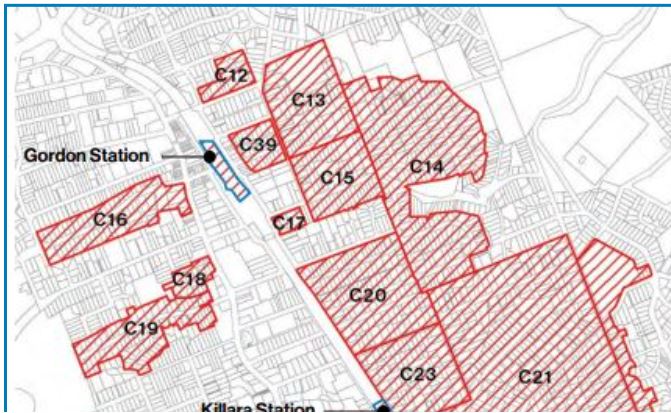
Map of the 28 conservation areas in the vicinity of the four TOD stations. Source TKD Architects. Ku-ring-gai Heritage Conservation Area Review, prepared for Ku-ring-gai Council, October 2024:

Gordon Park Estate McIntosh Ansell Grant Conservation Area(PDF, 184KB)
Roberts Grant Conservation Area(PDF, 79KB)
Robert Street Khartoum Avenue Conservation Area(PDF, 91KB)
OMC_30102024_AGN_AT_EXTRA_Attachment_15886_3-Draft-HeritageDownload
More about the TOD
The Transport Oriented Development (TOD) State Environmental Planning Policy (SEPP) undermines heritage protections in Ku-ring-gai by prioritising high-density development, targeting approximately 23,200 dwellings.
Ku-ring-gai Council’s Preferred TOD Scenario (3b refined) to the TOD will rezone to create … dwellings in Killara with building heights ranging from 3–8 storeys within 800m of the station. This threatens the integrity of Heritage Conservation Areas (HCAs) in Killara despite 80% safeguarded under the Preferred Scenario (3b refined). It also leaves heritage streetscapes vulnerable to “development uplift” and State Significant Development (SSD) spot rezonings. The weakening of robust HCA protections will erode Killara’s irreplaceable heritage.
Transport Oriented Development (TOD) Impacts on Gordon
Gordon, along with Killara, Lindfield and Roseville, is one of 37 railway stations identified to be rezoned as Transport Oriented Development (TOD). This proposed to rezone low-density and heritage conservation areas within 400 meters of Killara Station for mid-rise apartment buildings (6–8 storeys). This fundamentally threatens Killara’s heritage-rich, low-density character, defined by Federation and Californian bungalow homes, lush gardens, and Heritage Conservation Areas (HCAs).
Ku-ring-gai Council resolved to place on public exhibition (31 March 2025) an alternative Preferred Scenario (3b refined). This recommends 2,778 additional new dwellings to Killara as part of a 24,562 dwelling target across the four railway precincts (Gordon, Killara, Lindfield and Roseville) and 3–28 storeys building heights and FSR range of 0.85:1 to 8.0:1 for 800 metres from Gordon Railway Station to provide an additional 9,012 dwellings for Gordon.
The short timeline to consult with the community from November to December 2024 on an alternative TOD scenario resulted in the recommendation for the alternative Preferred Scenario (3b refined) that was placed on public exhibition from 31 March to 22 April 2024. This public consultation was agreed as part of the Land & Environment Court Mediation Agreement between Ku-ring-gai Council Vs Minister for Planning.
Council must soon vote on the alternative Preferred Scenario (3b refined) and resolve it as a Local Environment Plan to be gazetted by the NSW Minister of Planning Paul Scully. If Council does not meet this May 2025 deadline, the original TOD controls will be implemented. This has placed enormous pressure on communities as well as creating new ‘winners & losers’.
The short public exhibition deadline (31 March to 22 April 2025) limited community input. However, Council proceeded to put it public exhibition until 22 April 2022 and indicated it would only ‘tweak’ the draft Local Environment Plan (LEP). This is despite considerable opposition at the 31 March 2025 Public Forum that preceded the Extraordinary Council meeting. Many argued at the Public Forum that the Council’s alternative scenario “development uplift” proposal for heritage items, would devalue heritage items if they were integrated into larger developments. Many heritage owners argued that developers would not wish to integrate their properties and they would be left ‘isolated’ and be financially disadvantaged.
FOKE remains skeptical of outcomes, as State Significant Developments could bypass protections and asks:
- whether the future Housing Development Authority (HDA) or SSD applications received by the NSW Government after 21 May 2025 will not override the Council’s approved TOD scenario and LEP provisions across the four TOD suburbs?
- Will Ku-ring-gai Council be responding with a submission on the Tryon Road State Significant Development and the others?
- whether Ku-ring-gai Council has received a reply from Minister Scully to Council’s letter regarding a “saving clause” related to Transport Oriented Development (TOD) meaning that the new TOD planning controls , won’t apply to applications made but not determined before May 21, 2024, or modification applications made after that date if the original consent was granted on or before May 21, 2024 ?
Ku-ring-gai Council’s preferred scenario 24,500 dwelling targets:
State Significant Development with the NSW Department of Planning, Housing & Infrastructure (DPHI), as of 25 April 2025:
All currently at a stage of prepare EIS.
Lindfield
- 9-21 Beaconsfield Road Lindfield
- 12-16 Bent Street Lindfield (currently on public exhibition)
- 2-4 Woodside & 1-3 Reid Street, Lindfield
- 2-8 Highgate Road, Lindfield
- 1-5 Nelson Road, Lindfield
- 27-29 Tryon Road, Lindfield (currently on public exhibition)
- 59-63 Trafalgar Avenue, 1A and 1B Valley Road, Lindfield
- 11-19 Middle Harbour Road, Lindfield
- 24, 26, 28 Middle Harbour Road, Lindfield
Killara
- 10, 14, & 14A Stanhope Road, Killara, STATE SIGNIFICANT DEVELOPMENT
Gordon
- 3-9 Park Avenue, Gordon (currently on public exhibition)
- 3a,3b,5a, 7 Burgoyne and 1&3 Pearson Avenue and 4 Burgoyne Lane, Gordon
Roseville
- 2-4 Larkin Street and 1-5 Pockley Avenue, Roseville
- 2,4,6,8,10,12,14, & 16 Pockley Avenue, Roseville
- 21-27 Roseville Avenue and 16-24 Oliver Road, Roseville (on public exhibition 1 May)
- 17-21 Shirley Road, Roseville
More Preferred Scenario Maps:
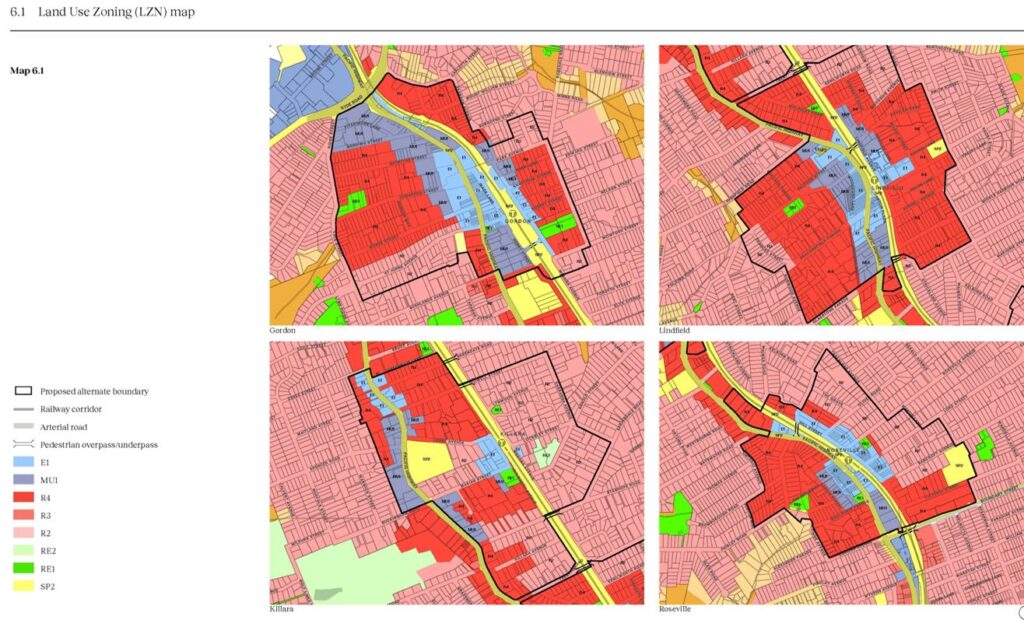
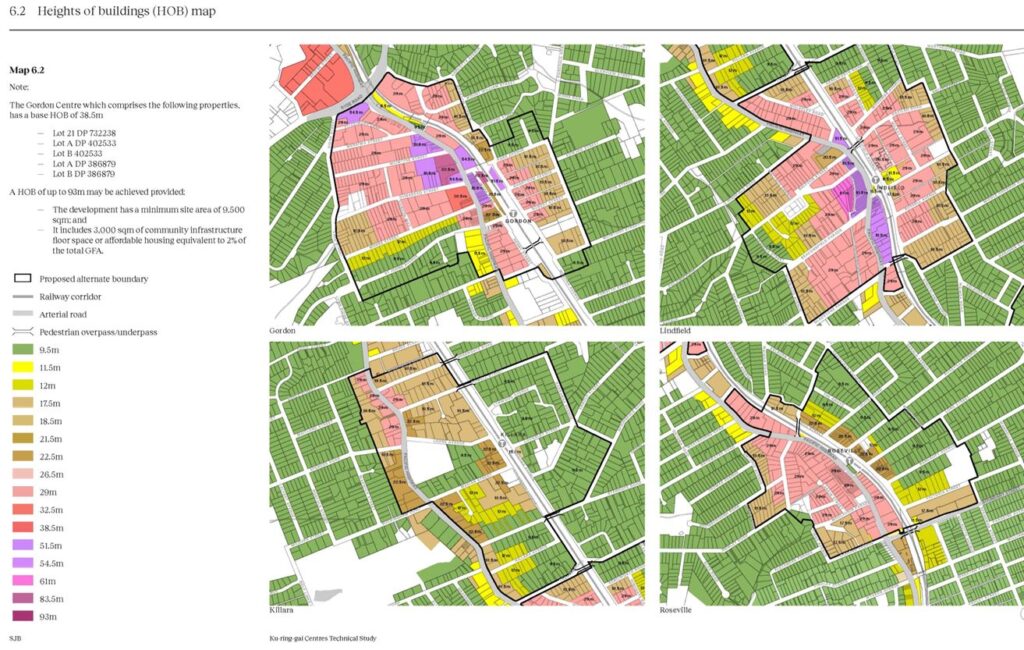
Overview of Council response to NSW Government planning reforms
In December 2023, the NSW Government announced a range of major planning reforms to deliver additional housing.
This included:
- The establishment of Transport Oriented Development precincts between Roseville and Gordon.
- The Low and Mid-Rise reform to allow additional terraces, townhouses, multi-unit dwellings and apartment buildings near stations and town centres.
Ku-ring-gai Council expressed concern that the proposed one-size-fits-all reforms would have a range of unnecessary and unwanted impacts on the Ku-ring-gai Council area, particularly in relation to Ku-ring-gai’s environment and heritage and the strain on existing infrastructure and facilities.
Submission
In February 2024, Council lodged a submission on the reforms.
- Final Ku-ring-gai Council Submission – Transport Oriented Development Program(PDF, 7MB).
- Appendix 1 Community Engagement report(PDF, 2MB).
- Appendix 2 Hill Thalis Architecture and Urban Design Opinion(PDF, 3MB).
- Appendix 3 Lisa Trueman Independent Heritage Advice(PDF, 1MB).
- Appendix 4 Land Eco Consulting Independent Assessment of Potential Ecological Impacts(PDF, 3MB).
Council work since this time
Since this time, Council has been undertaking a series of actions to plan for additional housing, which considers community feedback and responds to Ku-ring-gai’s unique local area.
These actions include:
- Preparing alternative housing plans for the Transport Oriented Development (TOD) precincts.
- Working to establish a minimum lot size for dual occupancy development.
- Exhibiting a proposed Affordable Housing Policy.
Council also took legal action against the TOD policy.
independent-heritage-advice-to-ku-ring-ai-council-housing-reforms-and-tod-seppDownload
appendix-4-land-eco-consulting-independent-assessment-of-potential-ecological-impacts (1)Download
References
Gordon Railway Station Group, NSW Government
Scenes from Gordon and Killara – Ku-ring-gai Council
Wikipedia, Gordon railway station, Sydney

Stay in Touch
Sign up for FOKE E-News HERE
info@foke.org.au
https://www.facebook.com/friendsofkuringgai/